
2026 Pool Heater Maintenance Guide: Expert Tips for Richmond Hill Homeowners
Estimated read time: 18 minutes • Word count: 2,480 words
AVL Custom Homes has designed, installed, and maintained pools across Richmond Hill, Markham, Vaughan, and Aurora since 2004. With Natural Resources Canada's updated 2026 efficiency standards now in effect, and GTA energy costs rising, a neglected pool heater costs you more every single season - in gas bills, repair calls, and shortened lifespan. This guide gives you the exact same advice our technicians give clients on-site: what to maintain, when to repair, when to replace, and how to protect the most expensive component inside your unit.
Why the Heater Is the Heart of Your Backyard Oasis
Quick answer: A properly maintained pool heater extends your comfortable swimming season from early May through Thanksgiving - adding 8-10 extra weeks compared to an unheated pool in Richmond Hill's variable GTA climate.
A pool without reliable heating is a cold pond for much of the year in Richmond Hill, Markham, Vaughan, Aurora, and Bayview Hill. Our GTA climate swings dramatically - a cool May long weekend, a warm October afternoon - and a high-performing heater is what turns those marginal days into swim days.
Your heater works hard in challenging outdoor conditions year after year. It handles rain, frost, wind, and summer heat while moving thousands of gallons of water to your ideal temperature. Like any major home system, it thrives on consistent care. Neglecting regular pool heater maintenance Richmond Hill homeowners should perform leads to higher energy bills, reduced efficiency, and breakdowns exactly when you want to host a family gathering.
According to Natural Resources Canada data, well-maintained units run 30-50% more efficiently than neglected ones of the same model. A $200 annual maintenance visit can save $800-$1,200 in energy and repair costs over five years. Protecting your heater protects your wallet.
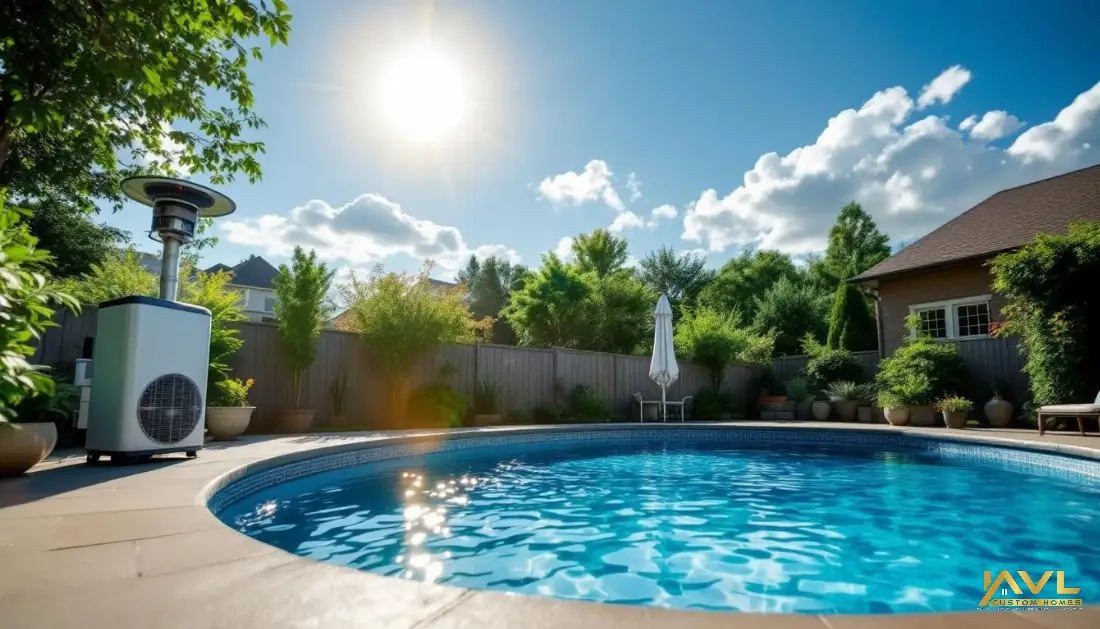
Gas vs. Heat Pump: Selecting the Best System for Richmond Hill's 2026 Climate
Quick answer: Gas heaters offer fast heating in any weather and are ideal for early spring and late fall. Heat pumps deliver a COP of 4-6 and cut operating costs by 50-70%, but performance drops below 10C - making them best suited for June through September in Richmond Hill.
Gas heaters: quick heat, any time
Gas heaters (natural gas or propane) raise pool temperature at roughly 1-2C per hour regardless of outdoor conditions. They're the right call if you swim in May, host late-September parties, or want to jump in on a cool evening. New 2026 models meeting NRCan standards achieve 82-95% thermal efficiency. Trade-off: higher monthly gas costs and a larger carbon footprint.
Heat pumps: efficient, eco-friendly, temperature-dependent
Heat pumps extract heat from ambient air and transfer it to the pool water. A 2026 model with a COP of 5.0 delivers 5 kWh of heat per 1 kWh of electricity - roughly 500% more efficient than gas. Running costs are 50-70% lower annually. The catch: efficiency drops sharply below 10-12C, so they're not reliable for early spring or late fall in Richmond Hill.
If you swim May to October and want quick heat on cool days, a gas heater gives you the flexibility our climate demands. If you swim June to September and want the lowest operating cost, a high-COP heat pump paired with a solar cover is the smarter long-term investment. Many of our clients now run a heat pump as the primary unit with a smaller gas backup for shoulder seasons.
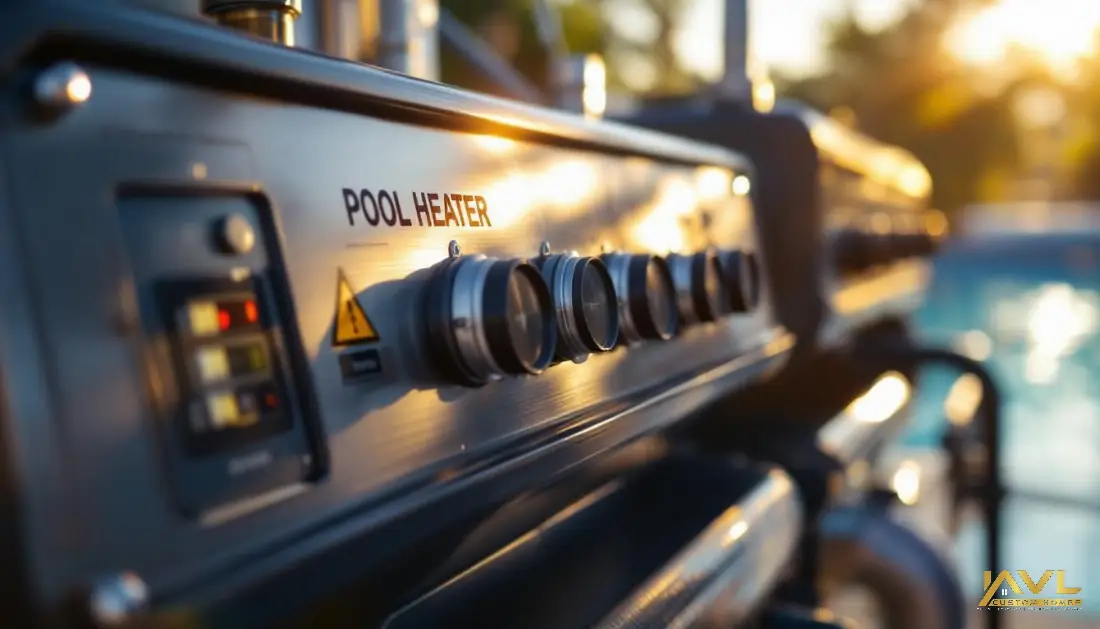
The Critical Link: How Your Pump and Filter Affect Heating Performance
Quick answer: Insufficient water flow from a dirty filter or short pump run times is the #1 reason heaters fail to reach temperature or shut off via the safety flow switch - and it's the cause most homeowners overlook entirely.
This is the section most pool heater guides skip - and it's why most service calls happen. Your heater has a flow switch. If water flow drops below the minimum threshold (typically 30-50 gallons per minute), it kills the burner as a safety measure. From the outside it looks like a heater problem. It's almost always a filter or pump problem.
The filter: Clean or backwash weekly during peak season. A cartridge filter that hasn't been rinsed in three weeks can cut flow by 40% - enough to trigger the flow switch and prevent ignition. This one habit prevents the majority of "my heater won't turn on" calls we receive in Richmond Hill every June.
The pump: Run it 8-12 hours per day during the heating season. A variable-speed pump set to a low-speed 24-hour circulation mode uses 50-90% less electricity than a single-speed pump running the same hours, and your heater will reward you with more consistent performance.
Quick diagnostic before calling a technician: Check your filter pressure gauge and confirm your pump is running. If the filter is dirty or the pump is off, fix that first. You'll save the service call fee 6 times out of 10. For professional seasonal home maintenance services that include pool equipment, our team covers Richmond Hill, Markham, and Vaughan year-round.
Pro-Tips for DIY Burner and Igniter Cleaning
Quick answer: Most "clicks but no ignition" problems on gas heaters are solved by cleaning the burner tray, igniter, and flame sensor - a 30-minute annual task that saves most Richmond Hill homeowners $200-400 in service calls.
Safety first: Cut power at the breaker and close the gas supply valve before opening the unit. Wait 10 minutes. Wear safety glasses and gloves. If you have any doubt about gas connections, call a licensed technician - this is non-negotiable.
Tools you will need
- Soft brush or old toothbrush
- Shop vacuum with narrow nozzle attachment
- 400-600 grit sandpaper or emery board
- Screwdriver set
- Flashlight
Cleaning the burner tray - step by step
- Remove the front access panel as shown in your owner's manual.
- Vacuum and brush every burner port. Spiderwebs and insect nests are the #1 culprit for uneven ignition in GTA pools left covered all winter.
- Inspect for deep pitting or rust. Light surface rust is normal. Deep pitting means the burner needs professional replacement.
- Wipe the tray clean. All ports must be fully open before reassembly.
Cleaning the igniter and flame sensor - step by step
- Locate the ceramic igniter rod and the thin flame sensor rod near the burner assembly. Your manual shows exact placement.
- Gently sand away oxidation and carbon buildup with fine-grit sandpaper. You are removing a thin film - not reshaping the component. Do not bend it.
- Clean surrounding soot from the housing.
- Reassemble, restore gas and power, and run a full test cycle.
A dirty igniter or flame sensor causes the heater to spark repeatedly without establishing a flame. The sensor detects no flame and shuts the unit down as a safety precaution. Cleaning takes 5 minutes and fixes this 90% of the time. The remaining 10% is a faulty igniter module - a $150-300 part.
The 10-Year Rule: When to Repair vs. Replace Your Unit
Quick answer: Most pool heaters last 7-12 years with good care. After 7-10 years, major repairs - heat exchanger, compressor - often cost more than a new 2026 model that comes with better efficiency and a fresh 5-7 year warranty.
Years 1-6: repair almost always wins
A pressure switch, temperature sensor, or ignition module costs $300-800 to replace - a fraction of a new unit at $3,500-$6,000 installed. Parts are in stock and labour is straightforward.
Years 7-10: run the math
Get a repair quote. If it exceeds 50% of the cost of a comparable new unit, replace. New 2026 models offer smart Wi-Fi controls, higher efficiency ratings, and 5-7 year parts warranties. The math usually favours replacement at this crossroads.
Year 10+: replacement is almost always the right call
A cracked heat exchanger, failed compressor, or repeated electrical failures at this age mean you are throwing money at a unit that will likely fail again within 12 months. A new unit pays for itself faster than most homeowners expect through lower monthly energy bills alone.
The hidden cost most owners miss: An aging heater that "works" but runs at 60% efficiency on a $200/month gas bill wastes $80/month. Over a full season that is $480-640 - nearly the cost of a full professional service. Thinking long-term about pool heater maintenance Richmond Hill costs always favours proactive decisions over reactive ones.
Protecting Your Investment: Water Chemistry and Heat Exchangers
Quick answer: Imbalanced pool water is the leading cause of premature heat exchanger failure. Following Pool & Hot Tub Alliance (PHTA) guidelines can double or triple your heater's lifespan - and it costs nothing beyond a $15 test kit.
What the heat exchanger is and why it matters
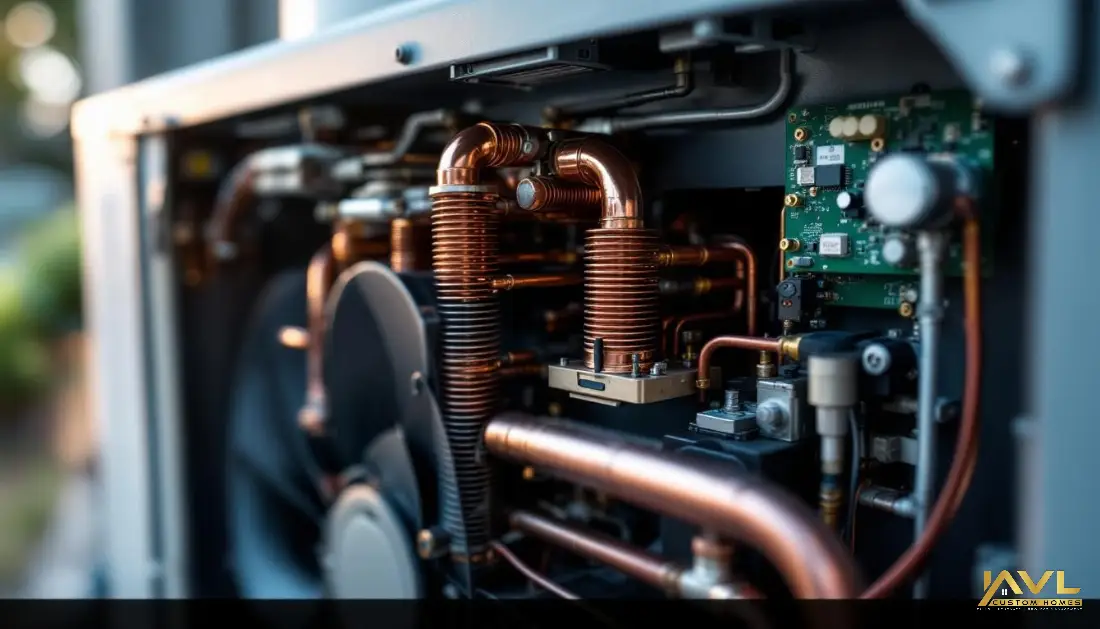
The heat exchanger is a network of copper or cupronickel tubes inside your gas heater where pool water absorbs heat from combustion gases. It is the most expensive single component - replacement runs $1,200-$2,500 plus labour. It does its damage invisibly over 2-3 seasons before you see a symptom.
The three chemistry threats
- Acidic water (pH below 7.2): Eats through copper tubing. Pinhole leaks develop within 2-3 seasons of consistent low pH. You won't notice until the heater is losing water or a technician opens it up.
- Scaling water (pH above 7.8 or high alkalinity): Deposits calcium carbonate scale inside the tubes. Scale is an insulator - your heater burns longer, your gas bill rises, and you don't know why.
- High chlorine combined with low pH: The most damaging combination. Corrosion accelerates dramatically. Always adjust pH before shocking.
PHTA 2026 target ranges - test against these weekly:
- pH: 7.4-7.6
- Total Alkalinity: 80-120 ppm
- Calcium Hardness: 200-400 ppm
- Free Chlorine: 1-3 ppm
- Cyanuric Acid (stabilized outdoor chlorine): 30-50 ppm
Weekly testing routine
- Test 2-3 times per week during peak season.
- Adjust pH first, then alkalinity, then calcium hardness.
- Add chemicals in small increments - re-test after 4-6 hours of circulation.
- Never add chemicals directly into the skimmer while the heater is running.
2026 Seasonal Maintenance Checklist
Quick answer: Follow this checklist every season and your heater will reliably outlast its rated lifespan - most Richmond Hill homeowners who do this push gas heaters past 10 years and heat pumps past 14.
Spring (before opening)
- Professional inspection and service
- Clean igniter, flame sensor, and burner tray (DIY or pro)
- Test and balance all water chemistry before first heat cycle
- Inspect gas lines, electrical connections, and exhaust flue
- Confirm flow rate and pressure switch operation
- Check manufacturer warranty status and log service date
Summer (weekly and bi-weekly)
- Clean or backwash filter weekly
- Test water chemistry 2-3 times per week
- Listen for unusual noises or watch for error codes
- Keep solar cover on overnight to retain heat
Fall (closing)
- Professional winterization - drain heater completely
- Do not skip this step: one freeze cycle can crack a heat exchanger
- Cover the unit with a manufacturer-approved cover
- Log any error codes or performance issues for next spring's opening
Frequently Asked Questions About Pool Heater Maintenance Richmond Hill
How often should I have my pool heater professionally serviced?
Once per year in spring before opening your pool is ideal. Annual service covers igniter cleaning, pressure switch testing, gas line inspection, and flow verification. Catching small issues before the season starts prevents mid-summer breakdowns and keeps newer unit warranties valid.
Can a dirty pool filter stop the heater from working?
Yes - this is the most common cause of heater shutdowns in the GTA. A clogged filter restricts water flow below the heater's minimum threshold, triggering the safety flow switch and preventing ignition. Clean or backwash your filter weekly during the heating season before assuming the heater itself is the problem.
What temperature should I set my pool heater to?
26-28C (78-82°F) is the comfort range for most Richmond Hill families. Each degree above 28C raises energy consumption by roughly 10-15%. Using a solar blanket or automatic cover overnight retains heat effectively and can reduce total heating costs by 50-70% compared to running the heater unassisted.
Why is my pool heater making a strange noise?
Grinding or rattling usually points to a failing pump motor or loose internal component. Clicking without ignition indicates a dirty igniter or flame sensor - clean it before calling a technician. Rumbling during operation may signal scale buildup inside the heat exchanger. Shut the unit off and have it diagnosed promptly.
When does pool heater repair stop making sense in Richmond Hill?
When the repair quote exceeds 50% of a comparable new unit's installed cost, or when the unit is over 10 years old facing a major failure - cracked heat exchanger, failed compressor, or repeated electrical issues. A new 2026 model with a 5-7 year warranty and higher efficiency ratings is the smarter long-term investment.
What are the new 2026 energy efficiency standards for pool heaters in Canada?
Natural Resources Canada's 2026 regulations require new gas heaters to meet minimum thermal efficiency of 82-84% and heat pumps to achieve a minimum COP of 4.0. Units exceeding these thresholds may qualify for provincial energy rebates. If your heater predates 2018, upgrading could cut operating costs by 30-50%.
AVL Custom Homes provides licensed pool heater maintenance, annual servicing, and replacement planning across Richmond Hill, Markham, Vaughan, and Aurora. If you are comparing one-time service vs ongoing oversight, see our Annual Home Care options. For this season, you can request a heater assessment and we will recommend the most practical next step.