
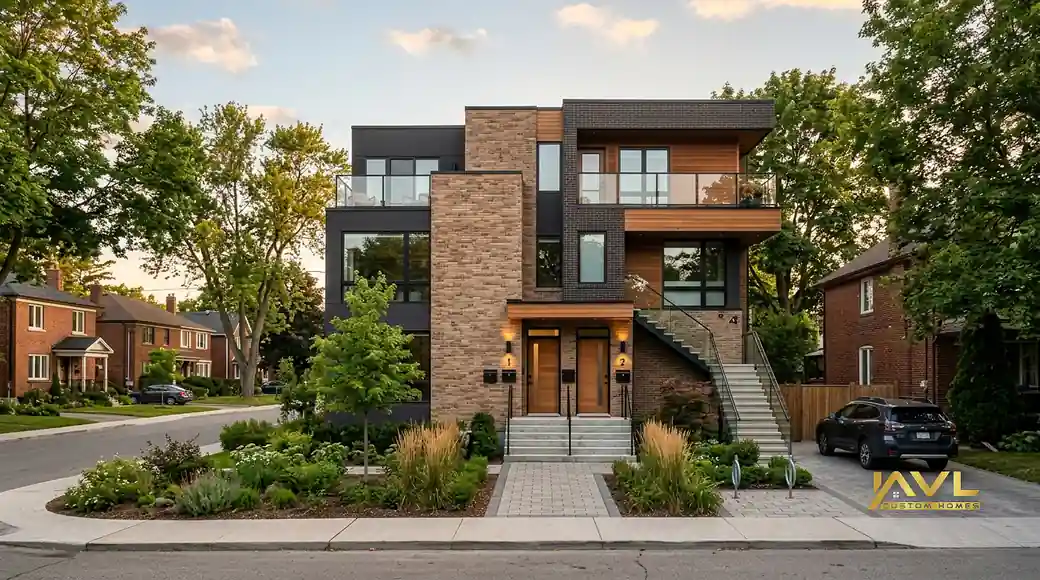
Feasibility, design-build planning, permits, and construction strategy for low-rise multi-unit projects across Toronto and the GTA.
Toronto’s multiplex rules have created a major opportunity for homeowners and investors, but the opportunity is not automatic. A successful fourplex, multiplex, garden suite, or laneway suite depends on zoning, building code, servicing, life-safety, financing assumptions, rental strategy, and construction sequencing.
AVL Custom Homes approaches these projects through a builder-led feasibility process. Before design goes too far, we test the property: structure, lot depth, access, tree constraints, servicing, layout potential, exits, acoustic and fire separations, and whether a conversion or new build is the stronger path.
The goal is not to force density onto every lot. The goal is to identify where a compliant, durable, rent-ready multi-unit project can be built with realistic budget, timeline, and long-term maintenance expectations.
A luxury single-family custom home in Toronto and the GTA and a fourplex, multiplex, or garden suite are both design-build projects — but the governing problems are not the same. Use this side-by-side view to see where your lot actually belongs.
Architecture, interior program, and long-term family lifestyle usually lead. Permitting focuses on one compliant home, one egress strategy, and one mechanical layout suited to a private estate.
Zoning, permit and compliance decisions stack for multiple dwellings. The project is driven by life-safety, fire separation, acoustic assemblies, vertical servicing, metering, and rent-ready durability — not only curb appeal.
Permitting
One dwelling vs. multi-unit + ADU
Design lead
Lifestyle & form vs. life-safety & layout
After handover
Private use vs. rental operations
Ongoing care
Annual Home Care for both paths
The right path depends on the existing structure, lot constraints, capital plan, and target unit mix.
Best when the structure, ceiling heights, exits, and servicing can support four safe, legal suites without excessive underpinning or reconstruction.
Higher capital requirement, but cleaner unit stacking, modern systems, durable assemblies, and more predictable lifecycle performance.
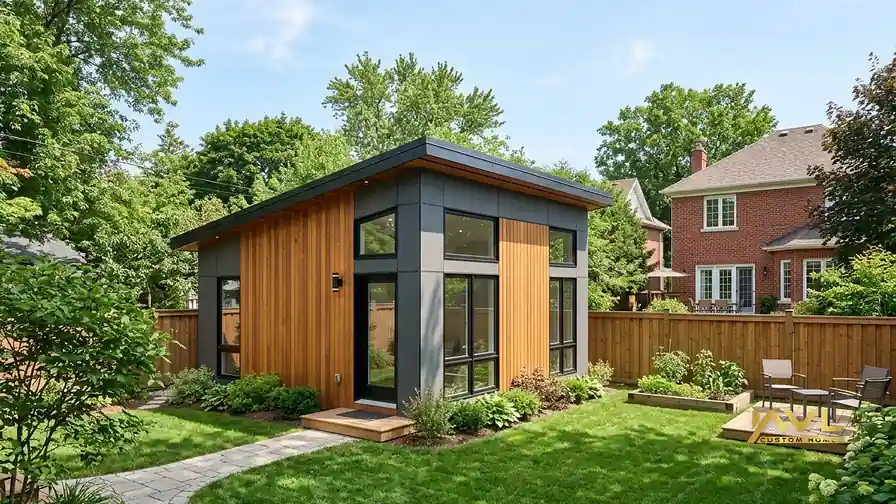
A detached ADU may increase unit count and flexibility when access, servicing, trees, setbacks, and private outdoor space can be resolved.
Fourplex and five-unit configurations may be evaluated differently by lenders and insurers, but financing is project-specific. AVL does not treat financing assumptions as guaranteed. We recommend conservative rent, operating cost, contingency, approval, and carrying-cost planning before committing capital.
Read Cost GuideReview property constraints, unit strategy, conversion potential, ADU options, budget class, and permit path.
Coordinate architectural, structural, mechanical, fire, acoustic, servicing, and permit-ready documentation.
Sequence demolition, structure, rough-ins, separations, envelope, finishes, inspections, and commissioning.
Deliver documentation, maintenance priorities, warranty records, and optional Annual Home Care support.
The best fourplex and garden suite projects reduce long-term friction. Efficient service runs, stacked wet walls, durable finishes, practical storage, strong ventilation, noise control, and clear maintenance access all protect tenant experience and operating performance.
A single custom home optimizes one household and one dwelling under one set of rules. A fourplex, multiplex, or garden suite layer adds multiple compliant units, rental operations, and stricter fire, sound, and servicing design. Same AVL design-build quality — a different project type.
A fourplex is a low-rise residential building with four self-contained dwelling units. In Toronto, many residential properties may support multiplex housing if zoning, building code, life-safety, servicing, and site conditions can be satisfied.
In some cases, yes. Feasibility depends on lot depth, access, servicing, trees, setbacks, and municipal requirements.
Conversion can work when the existing structure supports code-compliant suites. A new build usually costs more but can provide cleaner layouts, modern systems, and easier lifecycle maintenance.
Strong candidates have practical access, adequate lot depth, workable servicing paths, efficient layout potential, manageable tree constraints, and a realistic zoning path.
Structural changes, underpinning, fire and acoustic separations, servicing upgrades, egress, HVAC strategy, exterior access, durable finishes, and conversion versus new-build scope.
Timelines vary by approvals, design readiness, financing, and construction complexity. A serious plan includes feasibility, design, permit drawings, approvals, procurement, construction, inspections, and handover.
Yes. Multi-unit layouts need life-safety planning, fire separations, smoke and carbon monoxide protection, egress, acoustic assemblies, and mechanical coordination.
A compliant, well-designed multiplex can shift value toward income performance, but results depend on costs, rents, approvals, financing, operating expenses, and execution quality.
Sometimes, but eligibility depends on lender, insurer, CMHC or program rules, project profile, energy/accessibility targets, and underwriting. Confirm with qualified financing professionals.
AVL supports feasibility, design-build coordination, permit-ready planning, consultant alignment, construction sequencing, quality control, and post-build maintenance planning for qualified projects.
Prepare the address, survey if available, existing drawings, photos, target budget, desired unit mix, financing assumptions, and any municipal correspondence.
AVL serves Toronto and the GTA, including Richmond Hill, Vaughan, Markham, North York, Aurora, and King City. Feasibility varies by municipality and property.
Start with a feasibility conversation. We will review the property, intended unit mix, budget class, permit path, and whether a fourplex, garden suite, laneway suite, or simpler addition makes more sense.
