
Markham Townhouse Summer Maintenance Guide 2026
Getting Your Townhouse Ready for Summer: Introduction to Seasonal Maintenance
A standard three-storey townhouse in Markham loses up to 30% of its cooling efficiency through poorly sealed party wall attic bypasses. Many owners treat townhouses as maintenance-free. They think the condo board or a simple lawn care routine covers everything. That is a fast track to structural rot and bloated utility bills. A townhouse is a connected structural system. Your roof, your walls, and your foundation are physically tied to your neighbours. If the unit next door has a blocked gutter, that water does not respect property lines. It pools against your shared foundation. Our founder, Ali Vaez, structural engineer, always points out that row houses experience unique thermal and structural stresses. When the summer sun beats down on a block of brick townhomes, the entire structure expands as a single unit. If the fire separation walls in the attic are not properly sealed, hot humid air migrates horizontally between units. This moisture migration wreaks havoc on your indoor air quality and forces your air conditioner to work twice as hard.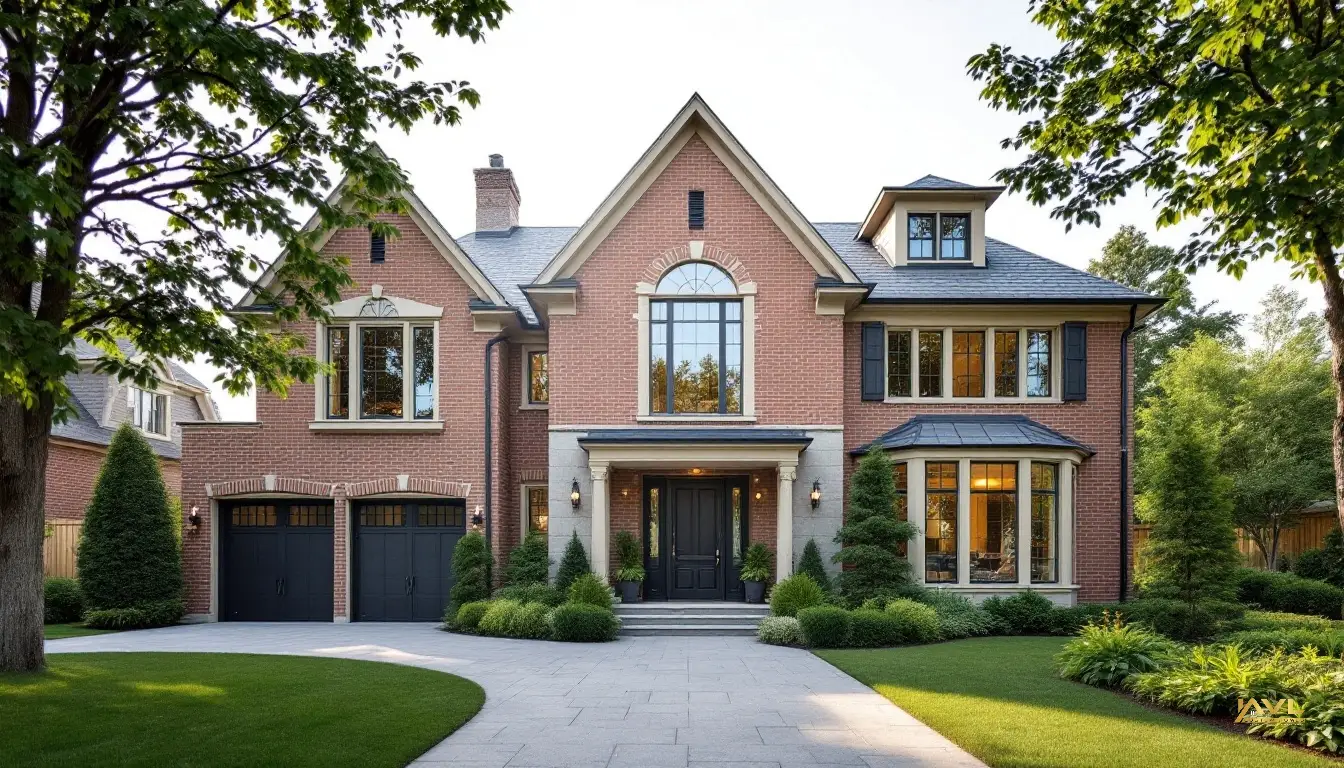
Common Summer Issues in Markham Townhouses: Leaks, Pests, and HVAC
Markham’s heavy clay subsoil contracts significantly during dry July stretches, pulling away from concrete foundation walls and leaving a direct channel for sudden summer downpours. When a thunderstorm hits, water rushes down these newly formed gaps. If your grading is flat, that water goes straight into your basement. I have spent 15 years on construction sites across the GTA, and I have seen too many finished basements ruined because a homeowner ignored a dry-spell soil gap. The clay shrinks. It leaves a void. The next storm fills that void. Your weeping tile gets overwhelmed, and suddenly you are calling emergency restoration services. [Foundation Wall] <--- Clay Shrinks (Dry July) <--- Void Created | [Heavy Storm] ----------------------------------------+ (Water enters void directly) Another massive culprit is the shared eavestrough system. Many row townhouses feature continuous gutter runs with downspouts located only on end units. If an intermediate unit has clogged gutters, the entire block suffers. Water backs up under the roof shingles, leading to ice damming in the winter and active leaks in the summer. If you want to avoid this, check your roofline before the summer storm season kicks off. For detailed roofing timelines, consult our Vaughan Townhouse Roof Maintenance 2026: Tips and Costs guide, which covers similar shared-roofing dynamics. Do not forget the air conditioning condensate line. This little vinyl tube drains the moisture stripped from your indoor air. In the summer, a townhouse AC unit can produce up to 30 litres of water per day. If algae plugs that line, the water backs up. It overflows the drain pan and pours into your furnace's electrical cabinet. Clearing a blocked AC condensate line takes 30 minutes, but neglecting it can cause $4,000 in water damage to finished basement drywall and sensitive furnace circuit boards.Outdoor Maintenance: Decks, Patios, and Yard Work for Markham Townhouses
The Unionville Heritage Conservation District guidelines dictate specific paint finishes and exterior material profiles that make even minor townhouse deck repairs subject to strict municipal oversight. If you live in one of Markham’s heritage zones, you cannot just run to the big-box store, grab some pressure-treated lumber, and start building. You need to know your boundaries. Townhouse lots in Markham are notoriously tight. Often, you have less than three metres of clearance between your rear deck and your neighbour's fence. This tight spacing restricts natural airflow. It turns the area under your deck into a damp, dark breeding ground for mold and wood-destroying insects. +------------------+ +------------------+ | Your Townhouse | | Neighbour's | | Deck | <--->| Fence | +------------------+ +------------------+ ^ ^ +--- Tight Spacing (3m) --+ +--- Restricts Airflow ---+ +--- Breeds Mold/Pests ---+ Inspect the deck ledger board—the critical structural connection where the deck meets your house envelope. If this joint was not flashed correctly during active construction, water will seep behind it. It rots the rim joist of your townhouse. Replacing a rotted 12-foot deck ledger board costs upwards of $3,200, whereas installing proper flashing during a weekend maintenance run costs under $80. If your property backs onto a local ravine or conservation zone, check your TRCA setback limits before planning any hardscaping or patio extensions.
Indoor Summer Maintenance: Tips for Cooling, Insulation, and Air Quality
Multi-level townhouses experience a severe reverse stack effect in summer, forcing hot air to pool on the third floor while the basement remains damp and cold. This is not just an HVAC issue; it is a thermal envelope problem. Toronto row and semi-detached stock sees the same humidity pattern — our Toronto townhouse summer humidity checklist covers the party-wall and moisture steps that apply across the GTA. Standard builder-grade townhomes often suffer from severe thermal bridging. The wood framing transfers heat directly from the exterior siding into your living space. To combat this, you need to manage your air distribution. Run your furnace fan continuously on the "low" setting to keep air circulating between floors. This balances the temperature differential without cycling your expensive compressor on and off. Check your attic hatch. It is often a simple piece of drywall sitting on a trim ledge in a closet. In July, your attic can reach 55°C. Without a proper gasket and insulation topper, that hatch acts as an open radiator, pouring heat directly into your top-floor bedrooms. Upgrading an uninsulated attic hatch to meet OBC R-60 standards costs about $180 in materials and cuts bedroom temperatures by 3°C within 24 hours. [Attic: 55°C] | [Hatch] <--- No Gasket / No Insulation = Heat pours into bedrooms | [Bedrooms: Hot] We utilize **thermal imaging diagnostics** to pinpoint exactly where hot air is bypassing your insulation. This diagnostic process reveals hidden voids behind drywall that standard inspections miss completely. To protect your asset year-round, consider our Annual Home Care Packages. Starting from $119/month, this service provides **builder-led preventive oversight** that keeps your mechanical systems running at peak efficiency while verifying your envelope meets modern performance standards.Creating a Personalized Summer Maintenance Schedule for Your Markham Townhouse
A sequenced home maintenance plan must prioritize exterior envelope sealing in June before high-humidity weather patterns stress the indoor mechanical systems in August. Do not bounce randomly from task to task. Follow a logical progression that matches the climate shifts of a Markham summer. Start your summer prep in early June by focusing on water diversion. Clear the gutters, check the downspout extensions, and test your sump pump. In July, shift your focus to the building envelope and thermal performance. Inspect window caulking, seal the attic hatch, and check the brick weep holes for blockages. Finish in August by servicing your mechanical systems, including deep-cleaning the HRV/ERV filters and washing the outdoor AC condenser coils. To help you plan, here is a structured schedule based on typical GTA townhouse layouts:| Month | Area of Focus | Specific Task | Estimated DIY Cost |
|---|---|---|---|
| June | Exterior Drainage | Clear shared gutters, extend downspouts 6ft from foundation, test sump pump. | $40 - $120 |
| July | Building Envelope | Inspect window caulking, seal attic hatch, clear brick weep holes of debris. | $50 - $150 |
| August | Mechanical Systems | Wash AC condenser coils, clean HRV filters, test thermostat calibration. | $30 - $80 |

Markham Townhouse Summer Maintenance FAQ
How often should Markham townhouse eavestroughs be cleared?
You must clear them at least twice a year, once in late spring after maple keys fall and once in late autumn. If your townhouse block is backed by mature trees, a third clearing in mid-summer is highly recommended to prevent water backing up under your shingles during heavy summer thunderstorms.
Can I change my townhouse exterior siding if I live in Unionville?
No, not without municipal approval. If your townhouse falls within the Unionville Heritage Conservation District, any exterior modifications—including siding materials, window profiles, and paint colours—must be approved by the heritage planning department to ensure they match the historical character of the area.
Why is my townhouse third floor so hot compared to the basement?
This is caused by the reverse stack effect and poor attic insulation. Hot air rises and pools at the top of the house, while cold air sinks to the basement. Sealing your attic hatch, balancing your ductwork dampers, and running your furnace fan continuously will help distribute the air more evenly.
What causes foundation cracks in Markham townhomes?
The primary cause is the seasonal expansion and contraction of Markham’s heavy clay soil. During dry summer months, the clay shrinks and pulls away from the foundation, causing minor structural shifts. If these cracks are not sealed, water will enter during the next heavy rainfall.
Is a sump pump necessary for a Markham townhouse?
Yes, if your townhouse has a below-grade basement. Markham's high water table and clay soils mean that water does not drain away quickly. A sump pump with a battery backup is your best defense against basement flooding during sudden summer storms.

Written by Ali Vaez
Founder & Principal Builder, AVL Custom Homes Inc.
Structural engineer with a BSc and MSc in Civil Engineering. Over 20 years of global construction experience, GTA operations since 2014.
Published: 2026-06-20 · 11 min read · 2,200 words
Ready to talk about your project?
AVL Custom Homes serves Markham and the Greater Toronto Area — custom builds, renovations, and builder-led home care.
Request a ConsultationOr call 647-466-6989
