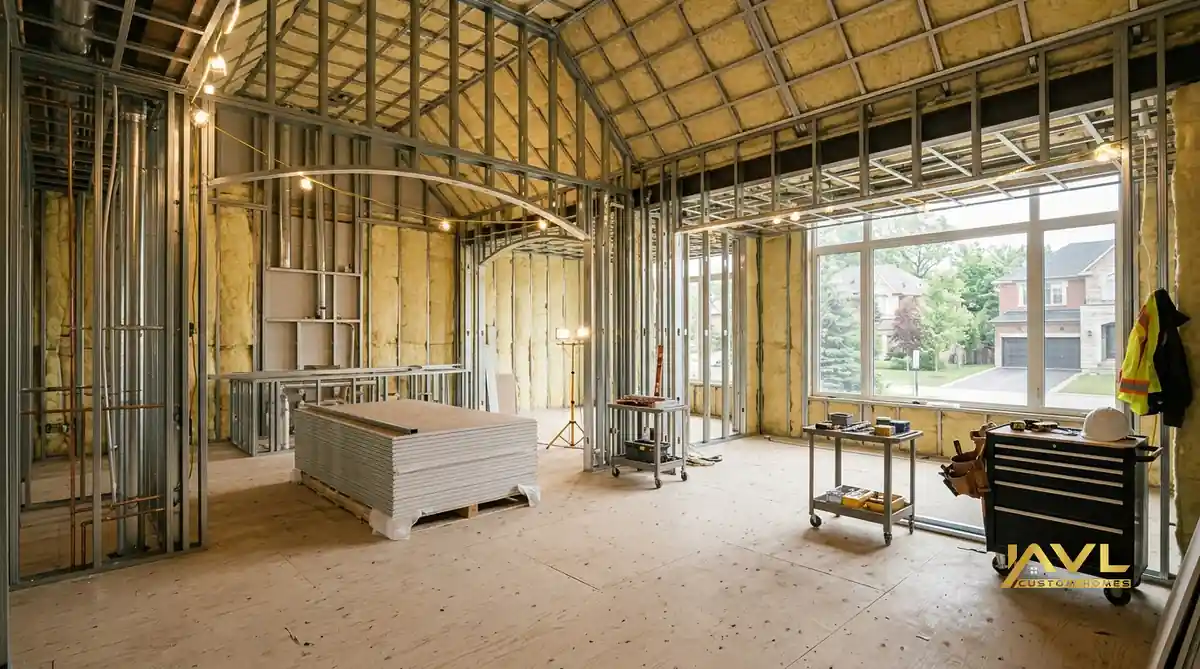
Water and fire damage restoration reconstruction in progress — framing and rebuild inside a GTA home
Restoration & Reconstruction

Water & Fire Damage Restoration & Reconstruction in Toronto & the GTA

Builder-led rebuilds after water, fire, storm, and sewer damage. Documented scopes, OBC-compliant construction, and engineer-backed assessments — from an independent builder, not an insurance company.

Quick answers

After mitigation dries the site, reconstruction must be code-compliant, documented, and sequenced — that is where most property-damage rebuilds succeed or fail.

What AVL rebuilds
Structure, envelope, drywall, kitchens, baths, basements, and mechanical systems after water, fire, storm, or sewer backup losses — not commodity emergency extraction alone.
Who we work with
Homeowners and property managers across Toronto, Richmond Hill, Vaughan, Markham, Oakville, and surrounding GTA municipalities — including owners coordinating with their own insurer or adjuster.
Documentation
Photo logs, written scopes, and progress reporting suitable for owner records or third-party review — led by a structural engineer founder with GTA permit experience since 2014.
Upgrade path
Like-for-like restoration scopes can be quoted separately from owner-funded upgrades so budgets stay transparent.

What is property damage restoration & reconstruction?

Restoration returns a home to its pre-loss condition after water, fire, storm, or sewer damage. Mitigation stops active damage (drying, board-up); reconstruction rebuilds structure, systems, and finishes to the Ontario Building Code. AVL leads the rebuild phase — coordinating permits, engineering, and trade sequencing with the same builder discipline as our major renovations and custom homes work.
Rebuild, not band-aid

Loss types we reconstruct

Emergency vendors stop active damage. AVL rebuilds the home — framing, insulation, air sealing, plumbing, electrical, drywall, and finishes — to current Ontario Building Code standards with permits where required.

  • Water & flood: basement floods, burst pipes, appliance leaks, foundation seepage after storms.
  • Fire & smoke: kitchen fires, electrical events, odour remediation coordination, structural char repair.
  • Storm & wind: roof intrusion, tree impact, envelope breaches, ice-dam related interior damage.
  • Sewer backup: sanitary surcharges, failed backwater valves, finished basement losses.

Read our guide: property damage restoration rebuild process in the GTA — or preventive water damage checklist if you are still assessing risk.

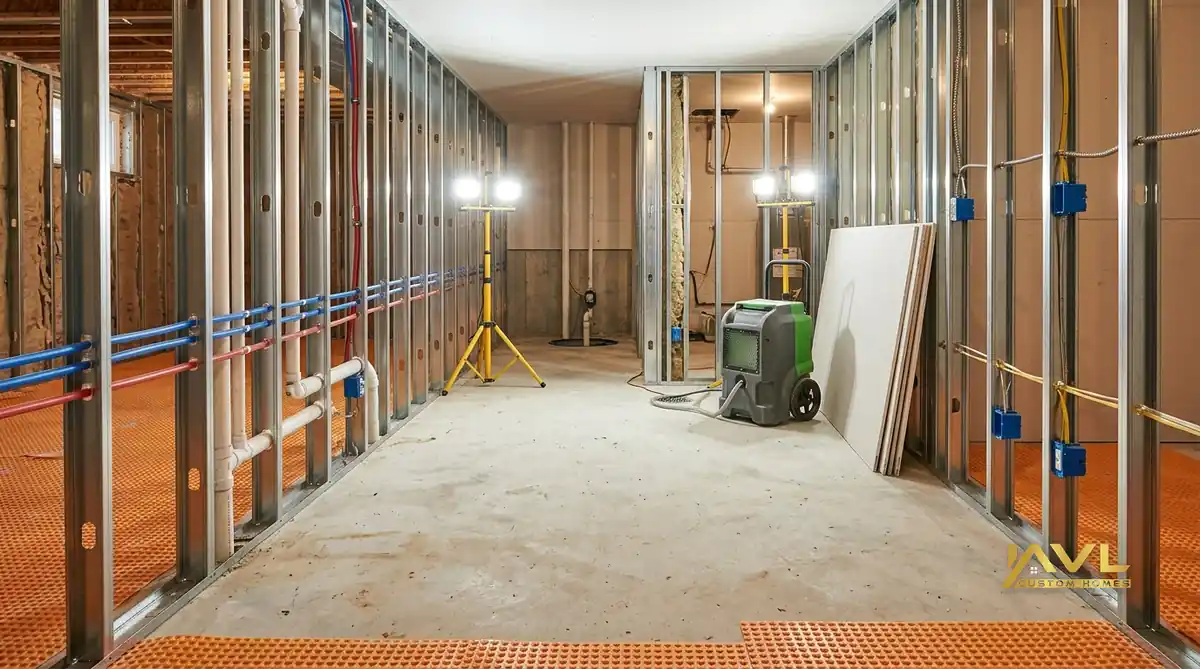
Basement flood reconstruction in the GTA — dehumidifier, rough-in plumbing, and code-compliant rebuild after water loss
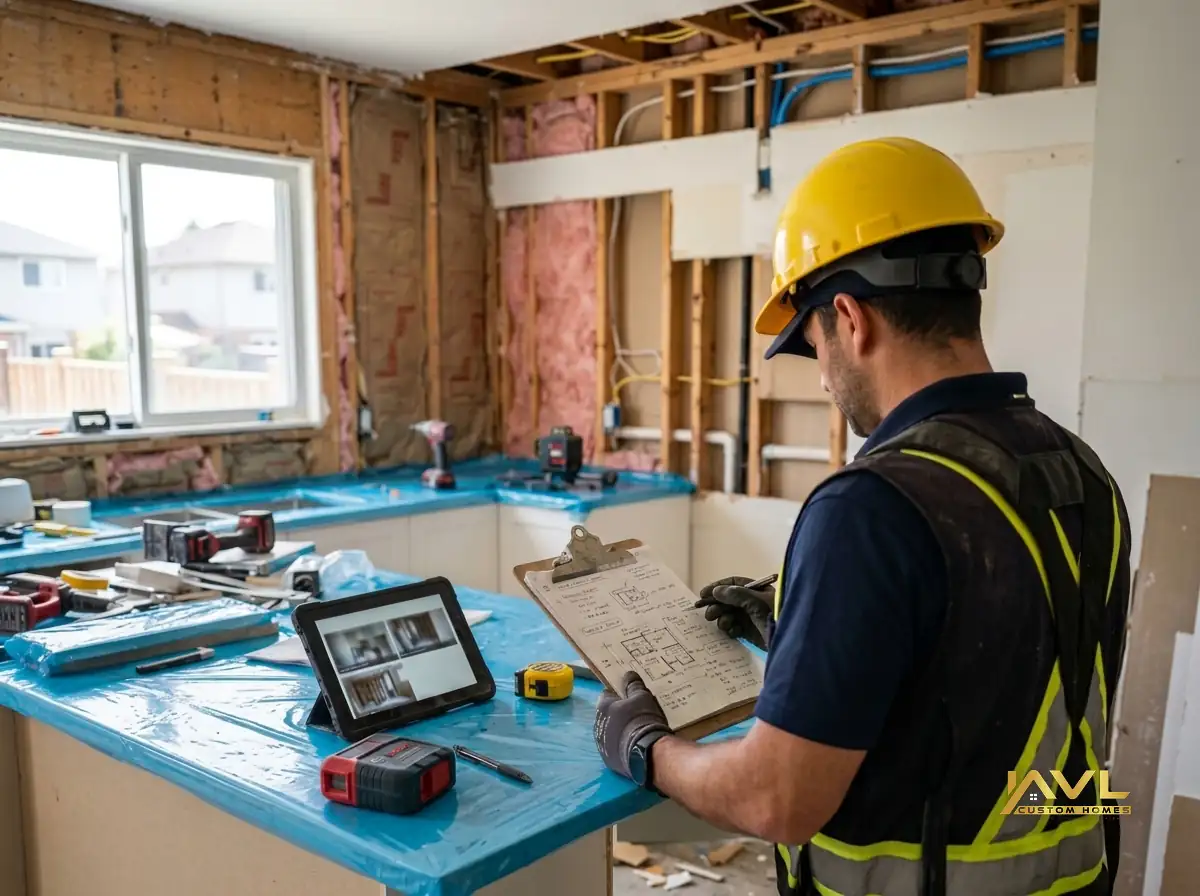
Property damage scope documentation and reconstruction planning at a GTA home site
Licensed builder

Engineer-led scopes that survive inspection

Reconstruction after a loss is construction — not a quick patch. AVL documents damage, defines scope, and rebuilds with the same permit, engineering, and quality controls used on major GTA renovations.

  • Written damage assessments

    Photo logs and line-item scopes suitable for owner records or third-party review.

  • Permit & inspection coordination

    Structural, plumbing, and layout changes sequenced through Toronto and York Region municipalities.

  • $5M liability · WSIB compliant

    Licensed trades on regulated work — the same standards as our custom home builds.

Request Restoration Assessment
Our process

From loss to code-compliant handover

Structured phases reduce duplicate work, scope disputes, and surprise code upgrades mid-project.

  1. 01

    Assess & document

    Site visit, moisture/structural notes, photos, and preliminary scope for owner or adjuster review.

  2. 02

    Scope & permits

    Like-for-like vs upgrade paths priced separately; permit strategy for structural, plumbing, or layout changes.

  3. 03

    Reconstruct

    Trade sequencing, inspections, quality control — same builder discipline as our custom and renovation work.

  4. 04

    Handover & care

    Close-out photos, warranty records, optional Annual Home Care to protect against the next season.

Independent builder

Documented rebuild quotes — without insurer partnership claims

We provide line-item scopes, progress imagery, and code-aware rebuild pricing for residential losses in the GTA. AVL is a licensed independent builder — not an insurance company, adjuster, or insurer-approved vendor — and we do not guarantee claim outcomes. Homeowners working through a claim can share our documentation with their adjuster where helpful.

  • WSIB-compliant trades on regulated work
  • $5M general liability insurance
  • Engineer-led structural review when required
  • Municipal permit coordination
Request rebuild scope
Expert insights

Restoration & reconstruction FAQ

AVL focuses on reconstruction — putting your home back to code after emergency mitigation is complete. We coordinate with your mitigation vendor or can recommend licensed partners for drying and emergency board-up when needed.

  • Phase 1 (mitigation): stop damage spread — pumps, drying, tarping, mould containment.
  • Phase 2 (rebuild): structure, drywall, finishes, mechanical, and permit compliance — AVL's core service.
  • Clear handoff between phases prevents duplicate scope and inspection delays.

We provide documented scopes, progress photos, and code-compliant rebuild quotes that homeowners and adjusters can use for claim settlement. AVL is not an insurer and does not guarantee claim approval — we deliver transparent construction pricing and execution.

  • Written assessments with photos suitable for adjuster review.
  • Like-for-like restoration scopes plus optional upgrade deltas priced separately.
  • Progress billing aligned to milestones where policy and lender allow.

Timelines depend on claim approval, permit path, material lead times, and extent of structural damage. Focused room rebuilds may run several weeks; whole-home loss reconstruction often spans multiple months after mitigation and design sign-off.

  • Early engineer/builder assessment accelerates scope definition.
  • Permits for structural, plumbing, or layout changes add municipal review time.
  • AVL sequences trades to minimize idle time between approved phases.

Rebuild cost follows damage extent, finish level, code upgrades triggered by the loss, and whether the scope is like-for-like or includes improvements. Basement water losses and kitchen fire rebuilds vary widely — documented site assessment is required before reliable numbers.

  • Structural and envelope work drives budget more than cosmetic selections.
  • Code-required upgrades (electrical, smoke/CO, insulation) may apply during rebuild.
  • Contingency of 10–15% is prudent when walls are open and hidden damage appears.

Need a rebuild scope after a loss?

Share your loss type, address, and timeline. We will outline next steps for assessment, documentation, and reconstruction.