
Aurora Renovations, Extensions & Additions: Expert SB-12 Guidance
Renovating an executive home or adding conditioned square footage in Aurora requires balancing architectural elegance with the rigorous thermal and structural mandates of the Ontario Building Code 2026. This comprehensive guide details how Supplementary Standard SB-12 governs envelope upgrades, mechanical sizing, and Town of Aurora permitting.
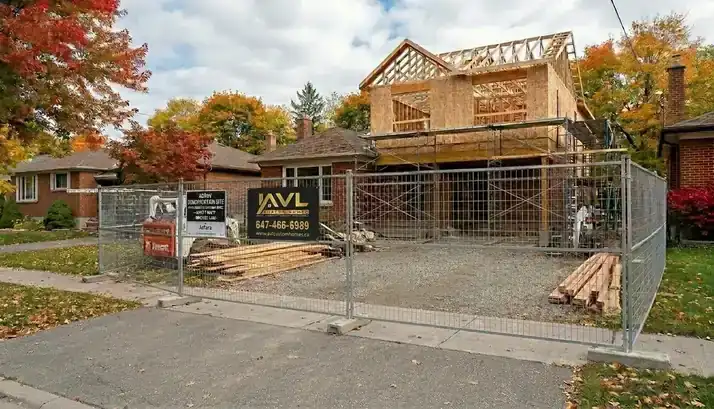
1. Building Envelope & Structural Standards in Aurora
Renovations, extensions, and additions in Aurora require a deep understanding of the Ontario Building Code (OBC), particularly Part 9 requirements for building envelope performance, structural integrity, and fire separation. At AVL Custom Homes, our building team ensures every residential project not only satisfies minimum municipal code mandates but exceeds performance benchmarks for lifetime comfort and asset durability.
When planning a major renovation, evaluating existing structural elements is critical. Many established detached homes in Aurora—from the historic downtown core to mature neighbourhoods along Yonge Street, St. John's Sideroad, and Bayview Avenue—feature dimensional lumber floor framing and uninsulated concrete foundation walls that cannot accommodate additional point loads without engineered reinforcement. Our team coordinates site investigations, laser scanning, and exploratory openings to verify joist spans, bearing wall load paths, and foundation footing dimensions before final architectural stamping.
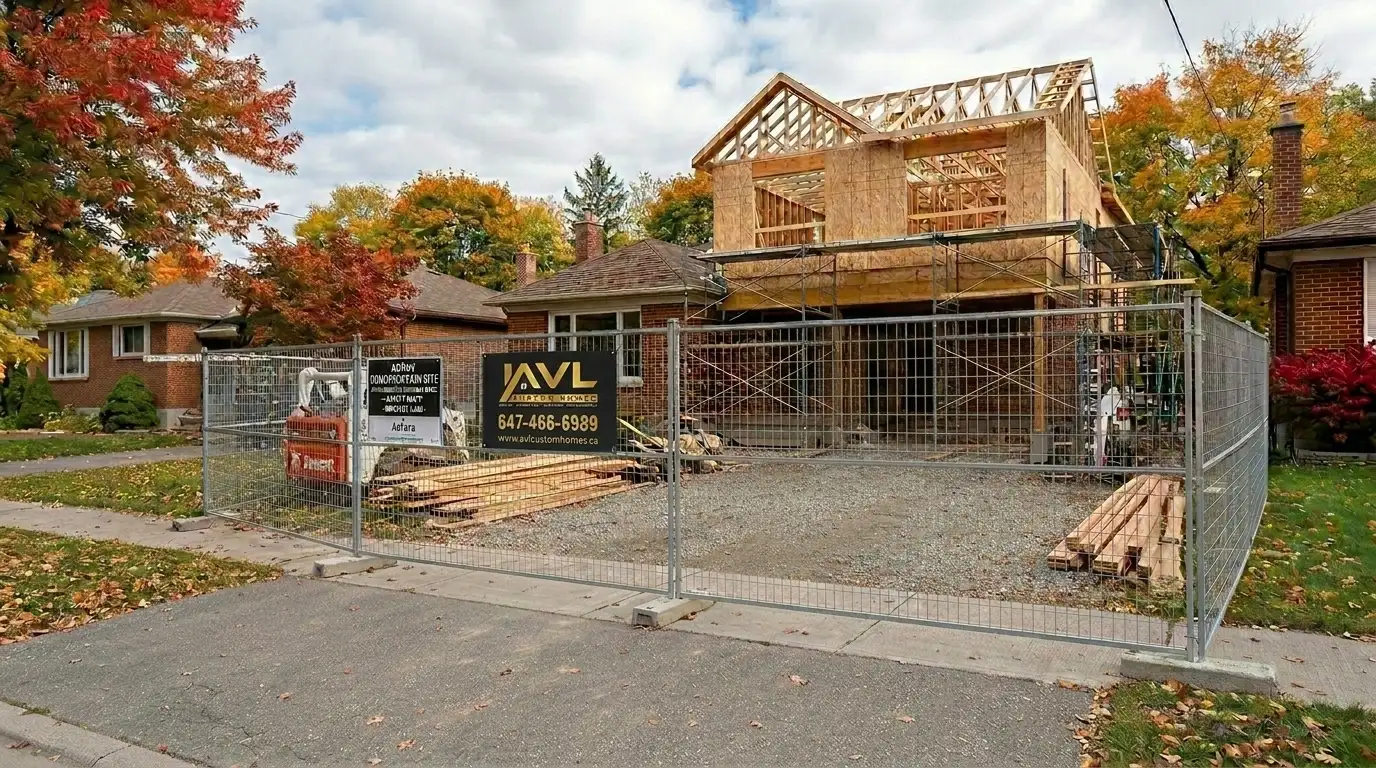
2. Integrating Structural Extensions & Second-Storey Additions
Extensions and second-storey additions introduce complex structural challenges, particularly at the connection interface between the original building envelope and new construction. The Ontario Building Code dictates rigorous load distribution rules to prevent differential settlement between new footings and aged foundations.
During the design phase, the project's licensed structural engineer models gravity loads, lateral wind loads, and seismic shear resistance. Step footings, helical piles, or underpinning may be deployed depending on local soil conditions across York Region's varied topography. Proper flashing transitions, self-adhered waterproof membranes, and continuous vapor barriers at the roof-to-wall and floor-to-wall junctions ensure that new structural additions remain entirely impervious to wind-driven rain and winter ice damming.
3. SB-12 Energy Compliance: What Aurora Renovators Must Know
Supplementary Standard SB-12 sets stringent minimum energy efficiency benchmarks under the Ontario Building Code. For Aurora renovation permits—specifically those altering exterior wall assemblies, replacing glazing units, or expanding conditioned square footage—SB-12 compliance is a non-negotiable prerequisite for building permit approval.
Compliance can be achieved via prescriptive packages or performance energy modeling. Key thermal envelope targets in Aurora (Zone 1 climate) include:
- Above-Grade Exterior Walls: Minimum effective thermal resistance of R-22 to R-24, often achieved through 2x6 framing with batt/mineral wool paired with R-5 continuous exterior rigid insulation to break thermal bridging through studs.
- Roof and Attic Assemblies: Minimum R-60 blown insulation with raised-heel roof trusses that maintain full insulation depth and unblocked soffit airflow right to the exterior wall plate.
- Windows and Sliding Doors: High-efficiency units with a maximum overall U-factor of 1.22 W/(m²·K) (or minimum Energy Rating ER 34), typically requiring argon-filled triple glazing with low-emissivity coatings.
- Foundation Walls: Continuous interior or exterior insulation delivering minimum effective R-20 from slab to top of foundation wall.
- Mechanical Ventilation & Heating: Energy Star certified high-efficiency heat pumps or condensing gas furnaces (≥ 96% AFUE) combined with Heat Recovery Ventilators (HRVs) delivering balanced fresh air exchange.
4. Practical Planning Steps for Aurora Homeowners
Achieving a seamless renovation that satisfies Town of Aurora building inspectors requires strict sequencing:
- Pre-Renovation Energy Assessment: Conduct an airtightness blower-door baseline test and thermal imaging scan to pinpoint existing thermal leaks before closing architectural scopes.
- Permit Set Engineering: Ensure all HVAC calculations (F280 heat-loss and duct sizing) and SB-12 compliance summary forms are completed by certified designers before Town of Aurora submission.
- Trade Sequencing Before Insulation: Never rush drywall installation. Plumbing pressure tests, electrical rough-in sign-offs, and rough HVAC duct inspections must precede framing insulation and 6-mil polyethylene air-vapor barrier inspection.
- Maintain Comprehensive Records: Retain manufacturer cut sheets, insulation batch labels, and window NFRC/CSA performance stickers on site for municipal building inspector verification.
For ongoing preventative care between major upgrades, consult our seasonal home maintenance checklist, Annual Home Maintenance Plan, and major home renovation services.
5. Common SB-12 Energy Pitfalls on Job Sites
Homeowners often invest heavily in premium windows but overlook thermal bridging along cantilevered floors or uninsulated rim joists. In Aurora's winter temperatures, missing rim joist insulation causes cold interior drafts and localized condensation that triggers hidden mold behind finished drywall.
Another prevalent mistake is oversized mechanical equipment. When a home addition is built to modern SB-12 thermal standards, heating demand per square foot drops drastically. Installing an oversized furnace leads to rapid short-cycling, uneven room temperatures, premature component failure, and elevated utility expenses.
Finally, puncturing the continuous vapor barrier for recessed lighting, speakers, or plumbing vents without acoustic sealant and airtight electrical enclosures invites warm, humid indoor air into cold wall cavities, creating damaging winter frost accumulation.
6. Working with AVL Custom Homes in Aurora
At AVL Custom Homes, our unified design-build approach bridges architectural vision, building science, and site craftsmanship. We resolve complex OBC 9.10 fire separation details and SB-12 thermal strategies on the blueprints long before demolition commences, ensuring predictable schedules, fixed budgets, and enduring quality.
Whether you are planning a whole-home transformation, an open-concept kitchen expansion, or a luxury multi-room addition, our team guides you from preliminary concept drawings through municipal permits to turnkey key handover.
Ready to plan your Aurora renovation or addition?
Discuss your project scope, timeline, and SB-12 requirements with our senior technical specialists.
Request an Aurora project review
Written by Ali Vaez
Founder & Principal Builder, AVL Custom Homes Inc.
BSc and MSc in Civil Engineering (Structural Engineering). Building since 2004 (outside Canada), serving the GTA since 2014, 17+ homes delivered.
Published: 2026-03-24 · 8 min read · 1,580 words
