
Why Your GTA Home Needs an Annual Home Maintenance Plan — Even When Nothing Is Wrong

Your furnace is heating. The air conditioner is cooling. The roof is not leaking. The basement is dry. The doors close properly.
So why pay someone to look at the house?
That is the right question.
An annual home maintenance plan should not exist just to give homeowners another monthly bill. It should solve a real problem: important maintenance gets forgotten, small changes go unnoticed, and finding the right person when something does go wrong becomes a project of its own.
A house does not remain unchanged just because everything appears to be working. Roof components weather. Sealants lose flexibility. Drainage patterns shift. HVAC equipment accumulates wear. Exterior materials move through Ontario's freeze-thaw cycles. Plumbing connections, windows, doors and mechanical equipment all need attention on different schedules.
Most failures do not begin dramatically. They begin with a small change:
- water reaching an area that should stay dry;
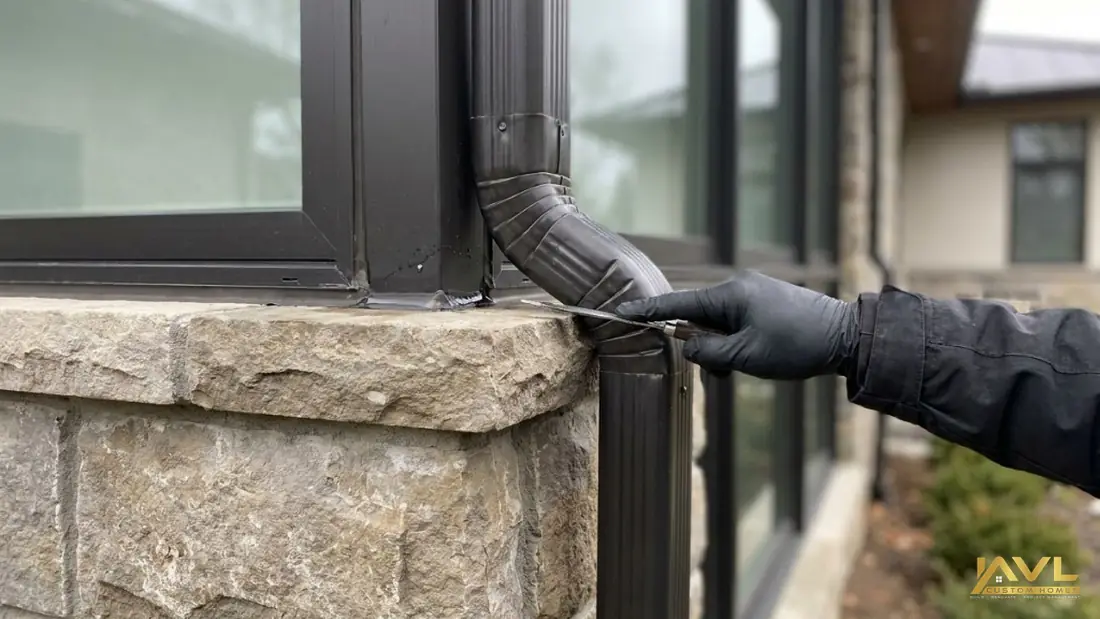
- a downspout no longer moving water far enough from the foundation;
- an exterior seal starting to separate;
- an HVAC system running longer than it used to;
- basement humidity trending higher;
- a crack that may—or may not—be changing.
Preventive home maintenance cannot guarantee that your house will never need a repair. Its purpose is more practical: make the condition of the house visible early enough that you still have choices.
Explore AVL's Annual Home Maintenance Plan for Toronto and GTA homeowners.
What does an annual home maintenance plan actually do?
There is a useful difference between home maintenance and home maintenance.
Maintenance is the individual work: replacing filters, servicing heating and cooling equipment, cleaning eavestroughs, maintaining drainage, repairing deteriorated materials and preparing exterior systems for winter.
Home care is the management system around that work:
- What needs attention?
- When should it happen?
- Who is qualified to handle it?
- What changed since the previous visit?
- What can safely wait?
- What should be addressed now?
A homeowner can download a 20-page checklist and still have a poorly maintained house if nobody follows it, records the condition or decides what the findings mean.
Your house can be “fine” and still need attention
A roof can look fine from the driveway while a flashing transition is deteriorating. A basement can appear dry while grading directs rain and snowmelt toward the foundation. A window can still open normally while its exterior sealant begins to pull away. An air conditioner can continue cooling while dirty coils or restricted airflow make it work harder.
None of those observations automatically means there is a serious defect. They are reasons to look more closely, record what is present and decide whether the condition requires maintenance, specialist investigation or simple monitoring.
The Insurance Bureau of Canada recommends maintaining eavestroughs and downspouts, directing water away from basement walls, checking grading and keeping sump-pump systems functional. The principle is straightforward: routine attention can reduce exposure before water enters the home.
Why GTA weather makes consistent care more important
A Toronto-area home operates in very different conditions in January and July. Winter brings freezing temperatures, snow loads and repeated freeze-thaw cycles. Spring adds snowmelt, saturated ground and heavy rainfall. Summer brings heat, humidity, storms and long HVAC run times. Fall brings leaves, rain and winter preparation.
The result is not one identical checklist repeated every month. It is the right attention at the right time. After winter, drainage, roof edges, exterior transitions and moisture conditions deserve attention. Before winter, the focus shifts to heating equipment, exterior openings, hose connections, drainage and other freeze-sensitive components.
Natural Resources Canada recommends professional pre-season HVAC checks—cooling equipment in spring and heating equipment in fall—along with filter care based on the manufacturer's instructions.
Consistency matters because a condition seen in one season may mean something different in another. A dry basement wall in August does not tell you how it behaved during the spring thaw. A door that binds during a humid week may return to normal later. A documented history provides context that a one-time glance cannot.
Water is the first category we would not ignore
If there is one category we tell homeowners to stay ahead of, it is water. Not because every house is about to flood, but because water is very good at finding small weaknesses:
- a downspout discharging beside the foundation;
- settled grading along a basement wall;
- a blocked eavestrough;
- a vulnerable roof or wall transition;
- deteriorated exterior sealant;
- a window well that does not drain properly;
- a sump pump that has not been tested.
Each condition may look minor on its own. What matters is the path it creates and what happens during the next heavy rainfall or thaw. IBC advises homeowners to keep eavestroughs clear, direct downspouts away from the home, maintain positive grading and ensure sump pumps operate properly, with backup power considered where appropriate.
A builder's way of looking at water
A generic checklist may say, “Check the caulking.” A builder-led review should ask what materials meet at the joint, whether it is intended to shed water or seal it, where water would travel if it failed, and whether the visible crack is the cause or only a symptom.
That is what “builder-led” should mean in practice: reading components as parts of an assembly, understanding how work was sequenced and identifying the appropriate trade instead of treating every visible symptom as an isolated handyman repair.
Your HVAC system does not have to be broken to need maintenance
Think about a furnace failure during a January cold spell. The question becomes, “Who can get here now?” That is emergency service.
Preventive care asks earlier: “Is the system operating as expected, and is there anything that should be serviced before the next heating season?” Natural Resources Canada recommends regular professional HVAC maintenance and filter cleaning or replacement according to the equipment manufacturer's guidance. A dirty filter can restrict airflow, raise energy use and contribute to equipment problems.
A general property-care company should not pretend to replace a qualified HVAC contractor. Its role is to keep the maintenance schedule visible, notice performance changes, document concerns and coordinate the proper specialist when technical service is required.
The same boundary applies to regulated electrical work. In Ontario, the Electrical Safety Authority states that a homeowner hiring someone for electrical work must use a Licensed Electrical Contractor. Oversight and coordination are useful; they are not substitutes for licensing.
A good report tells you what can wait
Not every defect deserves immediate repair. A report that labels every imperfection “urgent” is not useful. It creates anxiety and makes real priorities harder to see.
No immediate action is recommended, but the condition should be photographed or measured and compared later.
Routine work should be scheduled to preserve performance or reduce deterioration.
The condition has a reasonably clear cause and should be corrected within an appropriate timeframe.
There is not enough evidence to diagnose the cause. A qualified specialist or further testing is needed.
The condition presents an immediate safety concern or meaningful risk of damage if it is not addressed promptly.
That classification changes the homeowner's experience. Instead of receiving a list of 20 “problems,” you receive a plan: what matters now, what belongs in the budget and what simply needs another look next season.
Two examples of how prioritization works
These are representative maintenance scenarios, not claims about a specific client property.
A small crack near a basement window: The wrong response is to call it harmless or structural based on appearance alone. The useful response is to photograph it with scale, check for associated moisture or movement, note exterior drainage and determine whether it should be monitored or assessed by a specialist. If nothing changes, the record prevents needless alarm. If it grows or moisture appears, the comparison supports a faster decision.
Aging exterior sealant that is still performing: Immediate full replacement may not be necessary. Joint location, exposure, adhesion and the materials it protects all matter. A sheltered cosmetic joint and a failed joint above a vulnerable opening do not deserve the same priority. One may be monitored; the other may warrant scheduled maintenance before the next wet or freezing season.
Documentation changes how you manage a house
Without records, homeowners are forced to rely on memory: Was that mark there last year? Is this crack wider? When was the furnace last serviced? Did the rear downspout always drain there? Is basement humidity normally this high in August?
A useful report should say more than “Roof checked—okay.” It might record:
- Roof: No immediate visible concern from accessible areas; rear-addition flashing should be reviewed again after winter.
- Drainage: Downspout extension is connected and discharging away from the foundation.
- HVAC: Cooling system operating; professional pre-heating-season service remains due.
- Basement: No visible moisture at the time of review; continue tracking relative humidity.
Now the homeowner can plan, budget and compare. At the next review, the question is no longer “Does this look familiar?” It is “What changed?” The history also stays with the house when responsibility moves between family members, property managers or service providers.
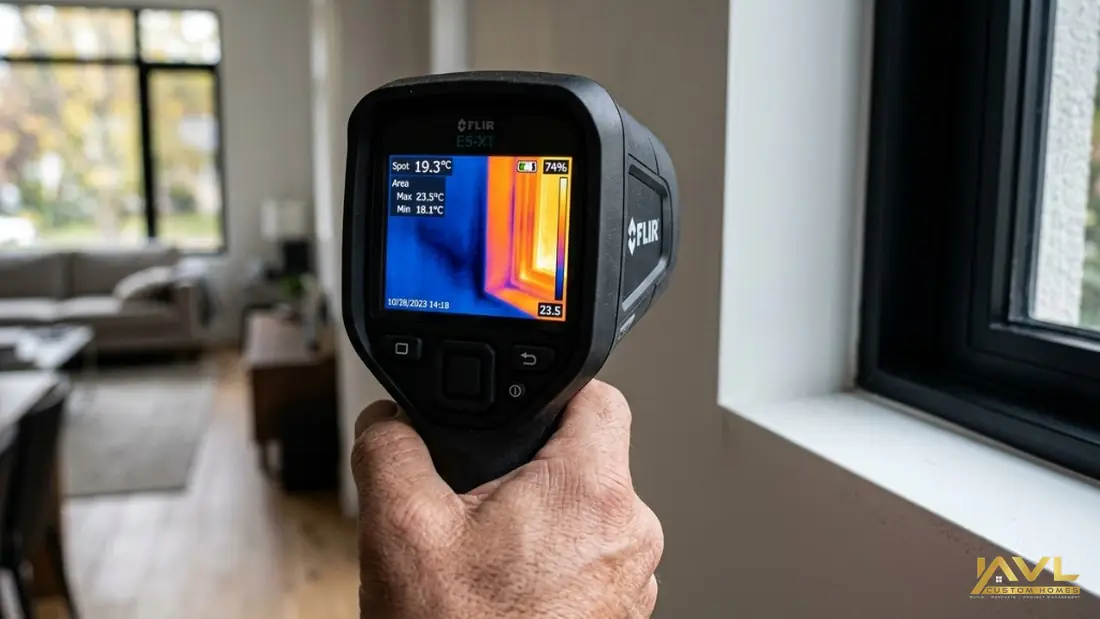
Thermal imaging is useful screening—not X-ray vision
A thermal camera does not see through walls and it does not diagnose every hidden defect. It displays surface temperature differences. Those patterns may point to areas worth investigating, including possible insulation gaps, air leakage, moisture-related anomalies or overheating electrical components.
Indoor and outdoor temperatures, sunlight, airflow, materials and recent weather all affect what the camera displays. Thermal imaging becomes more useful when combined with physical observation, knowledge of the assembly and appropriate follow-up. It also does not authorize a general maintenance provider to open electrical equipment or perform electrical work.
What homeowners can do—and what deserves a professional
An annual plan should not make you dependent on a service provider for every small task. Homeowners still play the most important day-to-day role because they see and hear the house between scheduled visits.
Usually reasonable for a homeowner
- Replace accessible HVAC filters as instructed.
- Test smoke and carbon-monoxide alarms.
- Look for visible leaks or condensation.
- Keep accessible drainage paths clear.
- Watch for new stains or changing cracks.
- Know the main water shutoff location.
- Record unusual HVAC sounds or comfort changes.
Better handled by a qualified professional
- Fuel-burning appliance work.
- Refrigerant, combustion or internal HVAC service.
- Electrical work and investigation.
- Roof access or work at height.
- Persistent moisture with an unknown source.
- Structural movement or significant cracking.
- Work requiring permits or regulated credentials.
Health Canada recommends professional maintenance of furnaces and other HVAC equipment, filter care according to manufacturer instructions, and routine testing and replacement of certified smoke and carbon-monoxide alarms.
The decision is not “DIY or professional?” The better question is, “What can I safely observe or maintain, and where does the risk justify qualified help?”
A practical 12-month GTA home-care calendar
Every property is different, but this month-by-month baseline gives GTA homeowners a practical rhythm. Shift outdoor work when weather makes it unsafe or ineffective.
Check for unusual condensation, drafts, plumbing vulnerability and blocked exterior intake or exhaust points from safe areas.
Note recurring cold rooms, ice buildup, equipment concerns and spring maintenance needs.
Confirm sump-pump readiness and watch where snowmelt travels around the foundation.
Review eavestroughs, downspouts, discharge points, standing water and grading changes.
Arrange professional cooling-system service and review accessible exterior components.
Look at windows, doors, sealants and material transitions; plan suitable exterior work.
Monitor basement humidity, HVAC runtime, airflow and unusual sounds.
Confirm irrigation, hardscaping and gardens are not directing water toward the house.
Arrange the appropriate professional check and close open exterior maintenance items.
Keep drainage paths clear, review weatherstripping and disconnect hoses before freezing.
Prepare exterior water connections and confirm snow, ice and vulnerable-plumbing plans.
Record winter performance and use qualified help where access is hazardous.
For a task-focused companion, use AVL's seasonal home maintenance checklist.
What if you are away from home?
Preventive oversight becomes especially practical for homeowners who travel, own a second property, spend part of the winter elsewhere or manage rental homes. The risk of an unoccupied house is not simply that nobody is living there. It is that a small leak, heating failure or water intrusion may continue unnoticed.
IBC recommends having someone check the property regularly during an extended absence. Insurance policies can contain specific vacancy or unoccupancy requirements, so inspection frequency should never be guessed. Confirm it directly with your insurer or broker and keep a record of completed visits.
A home maintenance provider can support visibility, but the agreement must clearly state what a property check includes—and whether it satisfies your insurer's requirements. Do not assume that any maintenance visit automatically meets the policy.
Is an annual home maintenance plan worth paying for?
Ask what problem the plan solves for you. If you know your home's systems, keep good records, have reliable trades and make time for seasonal coordination, you may not need much outside help. Building your own system is a reasonable choice.
Professional oversight becomes more useful when:
- the home is large, customized or mechanically complex;
- you travel frequently or own multiple properties;
- several trades need to be coordinated;
- maintenance is repeatedly postponed;
- you want a documented condition history;
- you prefer planned decisions to emergency calls;
- you need someone to separate urgent work from items that can wait.
A home maintenance plan does not replace a repair reserve. Roofs, mechanical systems and finishes still age, and major expenses remain part of homeownership. The plan adds organization, documentation and coordination; it does not make replacement costs disappear.
What should you ask before choosing a plan?
- Is there a real condition review? Determine whether the service includes an actual property assessment or mainly discounts and call-out benefits.
- What documentation will I receive? Findings should support follow-up and year-over-year comparison.
- How are findings prioritized? The provider should distinguish monitoring, maintenance, repair, investigation and urgent concerns.
- What does each scheduled visit include? “Year-round” and “seasonal” can mean very different things.
- What happens after a concern is found? Ask whether the provider documents it, coordinates the next step and follows up.
- How is regulated work handled? Specialized work must be directed to appropriately qualified professionals.
- What is excluded? Access limitations, emergency response, repairs, materials and specialist fees should be clear.
- Does the service fit the property? A townhouse and a large custom residence may need different oversight.
- Will the home have an ongoing maintenance history? This separates a continuing program from a one-time visit.
What makes AVL Annual Home Maintenance Plan different?
AVL built its Annual Home Maintenance Plan around one principle: a home should be managed proactively, not only repaired after something fails.
The program is available to qualifying properties in Toronto and the GTA, including homes AVL did not originally build. Silver, Gold, Platinum and Bespoke service levels provide different visit cadences and levels of coordination so every property is not forced into the same package.
Depending on the selected plan, service can include documented condition reviews, scheduled property oversight, HVAC coordination and safety checkpoints, seasonal coordination, maintenance planning, thermal imaging, applicable handyman time, and vendor or trade coordination.
The distinction is not the longest feature list. It is how the work is managed:
- Components are considered as parts of a building system.
- Findings are documented instead of left as verbal observations.
- Priorities are based on condition, consequence and timing.
- Specialized work is directed to the appropriate trade.
- Follow-up preserves continuity from one visit to the next.
That is what builder-led oversight changes in practice. See current AVL Annual Home Maintenance Plans, eligibility and pricing. Because package details can change, the program page—not an older article—remains the source for current inclusions and prices.
You do not need to wait for a failure
After a major failure, homeowners face urgency, fewer scheduling choices, emergency pricing, stress and sometimes additional damage. Earlier information changes the timing.
If roof maintenance is approaching, you can schedule it. If mechanical equipment is aging, you can plan a replacement reserve. If drainage needs improvement, you can address it before the next major rainfall. If a component remains stable, you can document it and move on.
That is the practical difference between reactive repair and planned property care: not a promise that nothing will break, but a better chance to make the decision before the house makes it for you.
Build your own annual home maintenance plan system
- Create a property record. Record roof, furnace, cooling equipment and water-heater ages; renovation dates; warranties; previous repairs; and contractor information.
- Identify higher-consequence areas. Start with roof and flashing, drainage, basement moisture, sump systems, HVAC, exterior openings, plumbing shutoffs and major mechanical equipment.
- Establish a visual baseline. Photograph conditions you may need to compare later. Include context and a ruler where size matters.
- Separate maintenance from replacement. Consider condition, performance, consequence of failure and likely remaining service life—not age alone.
- Set seasonal reminders. Use the GTA calendar above and add manufacturer-specific requirements.
- Keep a repair reserve. Oversight identifies and organizes work; it does not pay for eventual repairs.
- Review the record annually. Ask what changed, what was completed, what remains open and what should enter next year's budget.
So, do you actually need an annual home maintenance plan?
Not every homeowner does. If you have the knowledge, time, records and dependable professionals to manage the property yourself, you can create an effective maintenance system without a subscription.
But if you own a larger or more complex home, travel frequently, manage several properties or simply do not want to spend your weekends tracking maintenance and coordinating trades, professional oversight may be worthwhile.
The value is not a guarantee that nothing will ever break. Something eventually will. The value is knowing more before it happens: what was checked, what changed, what needs attention, what can wait and who should handle the next step.
That is what a good annual home maintenance plan should provide: fewer surprises, better information and a more organized way to protect one of your largest assets.
Frequently asked questions
Is an annual home maintenance plan worth it?
It can be worthwhile when you need scheduled oversight, documentation or help coordinating qualified trades. If you already inspect the home consistently, maintain records and have dependable professionals, you may prefer to manage the system yourself.
How often should a house be professionally checked?
There is no universal schedule for every property. An annual condition review is a practical baseline for many homes, while larger, older or more complex properties may benefit from seasonal or quarterly attention. Equipment should also follow its manufacturer-recommended service schedule.
Can I do most home maintenance myself?
Many visual checks and routine tasks are appropriate for a capable homeowner, including filter care, alarm testing and watching for visible moisture. Work involving safety risks, regulated systems, specialized diagnosis or difficult access should be handled by qualified professionals.
Does preventive maintenance stop expensive repairs?
No program can guarantee that. Preventive care can identify developing conditions earlier, support proper maintenance and give homeowners more time to plan repairs or replacements.
Is annual home maintenance plan the same as a home inspection?
No. Annual home maintenance plan focuses on continuing maintenance, condition tracking and coordination. It is not a substitute for a pre-purchase home inspection, engineering assessment or specialized inspection when one is needed.
Is thermal imaging a complete inspection?
No. Thermal imaging shows surface temperature differences that may justify further investigation. It should be interpreted alongside site conditions and physical observations; it does not see through walls or prove the cause of an anomaly by itself.
Does a new home still need annual care?
Yes. New homes require maintenance, and an early condition record can create a useful baseline for tracking warranties, finishes, mechanical equipment and changes over time.
What if my home is vacant while I travel?
Arrange documented property checks and confirm the required frequency and conditions directly with your insurer or broker. Do not assume a generic maintenance visit satisfies your insurance policy.
Does AVL care for homes it did not build?
Yes. AVL Annual Home Maintenance Plan is available for qualifying homes in Toronto and the GTA, whether or not AVL originally built the property. Eligibility and recommended service level depend on the home and requested oversight.
How do I choose between Silver, Gold, Platinum and Bespoke?
Start with the property size, age, systems, complexity and occupancy—not only the monthly price. Compare how often you want the property reviewed, the depth of documentation and diagnostics, and how much coordination you need.
Sources and further guidance
- Insurance Bureau of Canada: Water Damage and Flood Protection
- Insurance Bureau of Canada: How to Manage Risks at Home
- Natural Resources Canada: Maintaining Your Home Heating and Cooling System
- Health Canada: Improve Indoor Air Quality in Your Home
- Electrical Safety Authority: Notifications and Inspections

Written by Ali Vaez
Founder & Principal Builder, AVL Custom Homes Inc.
Structural engineer with a BSc and MSc in Civil Engineering. Over 20 years of global construction experience, GTA operations since 2014.
Published: 2026-08-15 · 17 min read
Protect your home before the next surprise
Start with a documented property assessment and the level of oversight that fits your GTA home.
Request a Maintenance ConsultationOr call 647-466-6989
