
How to Close a Pool for Winter in Toronto & the GTA: 2026 Guide
September is when I stop seeing a swimming pool and start seeing water-filled systems that have to survive a GTA winter—heater, filter, valves, low points and accessory lines included.
A pool can look clean on closing day and still trap water in the wrong place. A cover can look secure while the water level underneath is wrong. A heater can run perfectly in September and still be damaged by freezing water if it is not winterized according to the manufacturer’s procedure. This guide is how I close a Toronto-area pool: start at the equipment pad, understand the plumbing, then work outward to water level and cover—and document plugs, valve positions and model numbers for spring.
1. When should you close a pool in the GTA?
Close when sustained cooling and freeze risk arrive—not on a fixed September 30 date—because warm water under a cover encourages algae while waiting for a hard freeze already in the forecast leaves water-filled equipment exposed.
Closing late is not automatically better, and closing early is not automatically safer. Choose a reasonable window and leave enough time to do the job properly.
What temperature should the pool water be before closing?
There is no single Ontario closing temperature that applies to every pool. Base the decision on sustained cooling, algae risk under a cover, freeze risk to water-filled equipment, and the procedure from your pool professional or equipment manuals—not a copied “below X degrees” rule from another backyard.
How much does pool closing cost in Toronto and the GTA?
I will not invent a fake market number. Closing cost varies with pool size, access, pool type, equipment, water features, heater, salt system, cover, plumbing complexity, condition, whether repairs are required, and whether opening and closing are bundled. A straightforward seasonal closing is very different from winterizing a pool with multiple water features, complex automation, an aging heater, or unknown plumbing.
For a first-time homeowner, start preparing a week or two before the actual closing. Find the pool manual, heater manual, filter model, cover instructions and any records you have. A ten-minute search in September can save a lot of guessing in November.
2. What I check first: the equipment pad
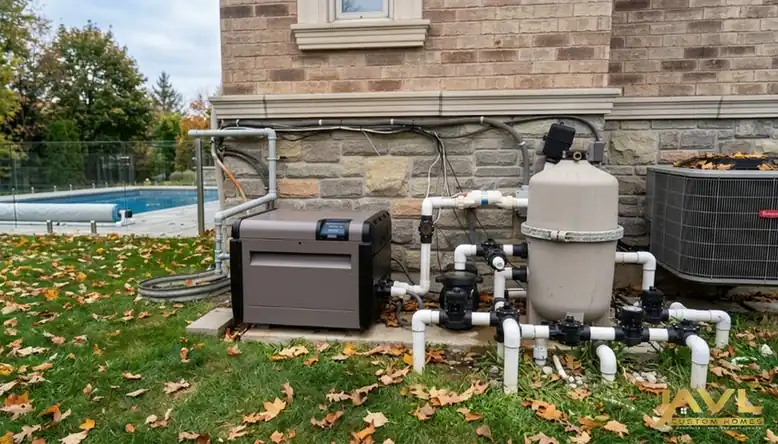
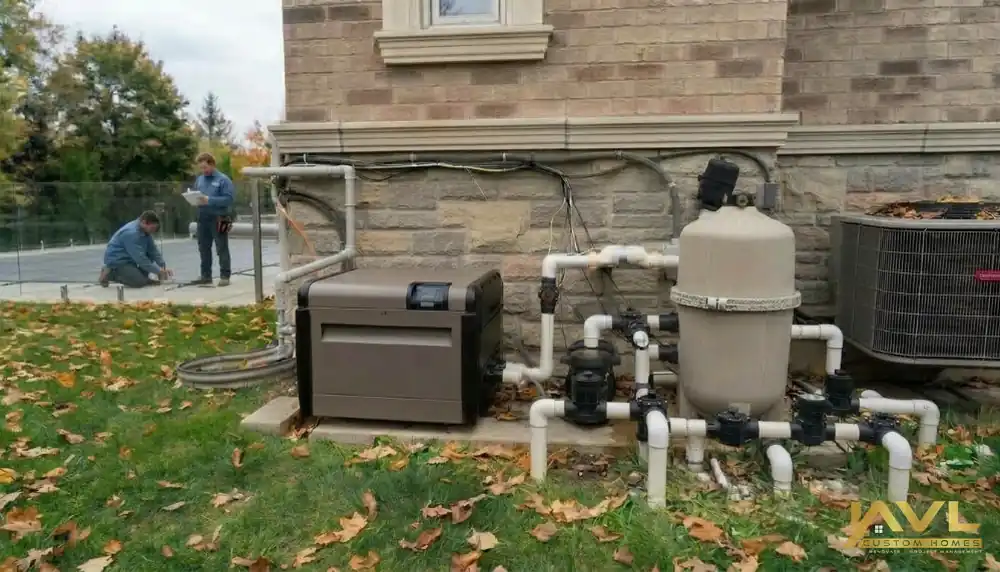
Before I touch the cover, I walk the equipment pad: heater type, pump and filter layout, sanitizer injection point, bypass arrangement, low points, and anything that can still hold water after shutdown. That pad tour usually reveals next spring’s problems early—corrosion, leaking unions, cracked fittings, poor drainage, and aging electrics.
Then I take photos of valve positions, equipment labels, plug locations and the full pad. Six months later those pictures beat memory. The same system thinking drives our professional home maintenance work: identify the system, document condition, then decide what needs attention.
3. Water chemistry and the closing sequence
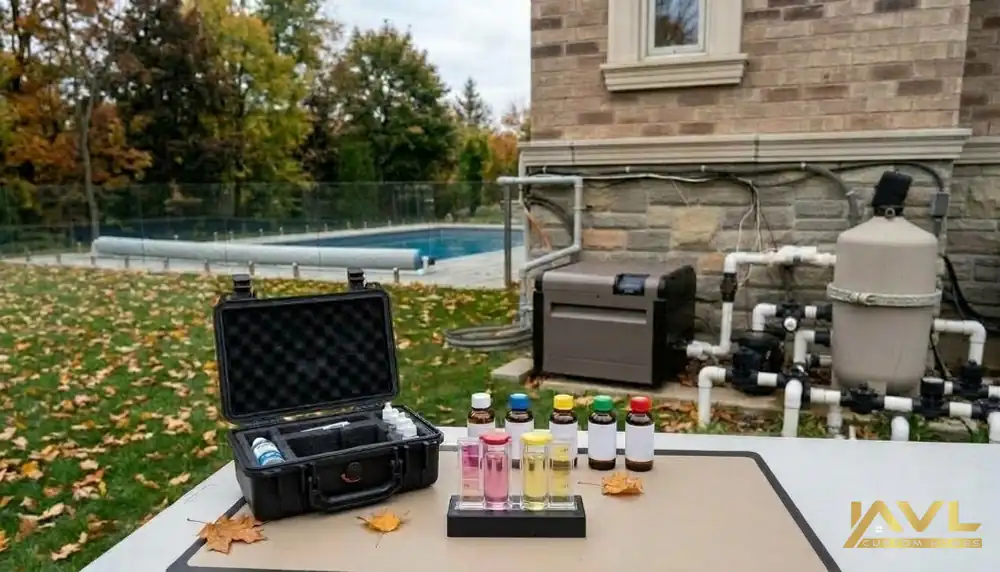
Bring the water into the appropriate closing condition for the pool, sanitizer and chemical products you are using—clarity alone is not enough, because aggressive chemistry damages heat exchangers when chlorine runs high and pH runs low.
Salt cells may need removal, cleaning and storage. Chemical feeders may need draining or isolation. Handle electrical shutdown per the equipment procedure. Pentair documentation specifically warns that excessive chlorine and low pH accelerate heat-exchanger corrosion, so closing is not an excuse to dump chemicals without reading the product directions. Once the water is ready, clean the pool thoroughly—debris under a cover does not become harmless overnight.
- Gather manuals for the pool, cover, heater, filter and sanitizer system.
- Test and balance the water according to the pool, sanitizer and chemical-product instructions.
- Clean the pool and remove organic debris before the cover goes on.
- Set water level for your specific pool and cover—not a neighbour’s number.
- Winterize plumbing lines, then drain pump, filter and heater per each manual.
- Protect or store salt cell / chlorinator components and label small parts.
- Secure the cover, protect equipment without blocking combustion air, and photograph the finished pad.
4. Water level: do not copy another pool
There is no universal “inches below the skimmer” number for every Toronto or GTA pool, because correct level depends on construction, liner or shell, cover type, and the pool and cover manufacturer instructions.
Latham’s general winterization guidance notes that many pools lower roughly one inch below the skimmer, but other cover systems and constructions call for different levels. Over-draining can also create problems unrelated to freezing when groundwater and structure interact with the shell.
Identify the pool construction and cover system first. Then follow the applicable manufacturer instructions for the water level. If you do not know what cover you have or cannot find the pool documentation, that uncertainty is itself a reason to get the system checked rather than guessing.
5. Blow out and protect the plumbing
Water expands when it freezes, so winterization is about keeping freeze expansion out of lines, fittings and low points—not about a single shop-vac trick applied to every pool the same way.
I do not give homeowners a universal air-pressure number. Use the procedure that matches the equipment and verify the result. A missing plug during spring opening is an annoyance; a missing or incorrectly installed plug during winterization can allow freezing water into equipment or plumbing.
6. Pump, filter and the trapped-water problem
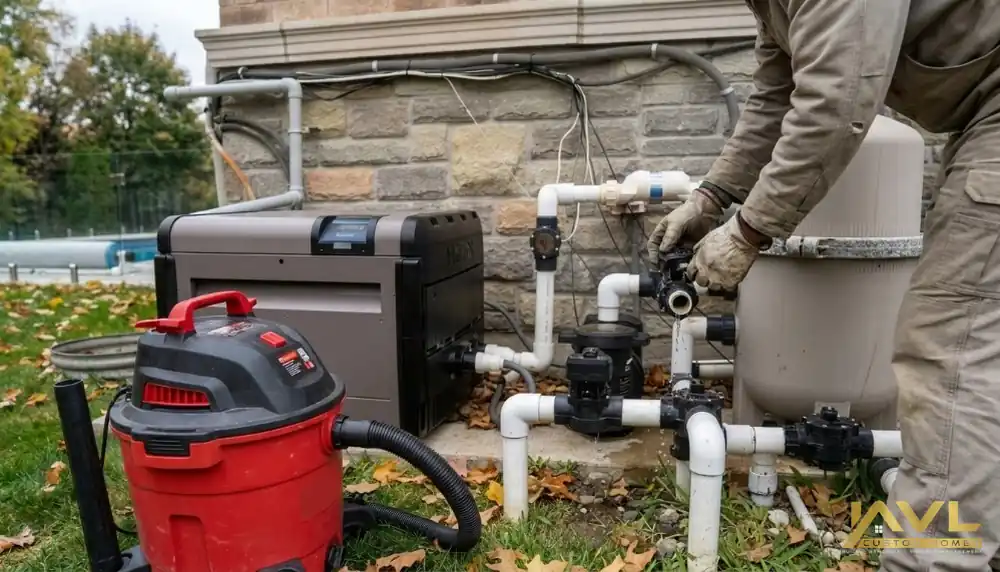
After the lines are handled, drain the pump and filter deliberately—opening one plug rarely empties the whole assembly, because housings, valves, unions and low points still retain water.
Drain and clean per the manufacturer, remove plugs where required, then take a second look. Where the procedure allows, an air or vacuum check can confirm overlooked pockets—but that is not a universal “shop-vac everything” rule. Bag plugs, caps and fittings together, label the container, and photograph where each part belongs.
7. Pool heater, heat exchanger and bypass valves
Do not rush the heater: it is expensive equipment, and the heat exchanger is the component I most want protected through a GTA freeze when water is left inside the unit.
Manufacturer guidance for freezing climates calls for outdoor-heater winterization and drainage. Latham likewise recommends draining pump, filter, heater and other water-containing equipment to manufacturer instructions. For in-season care, repair-versus-replace decisions and chemistry limits that protect exchangers year-round, see our 2026 pool heater maintenance guide.
Why I like a proper bypass arrangement
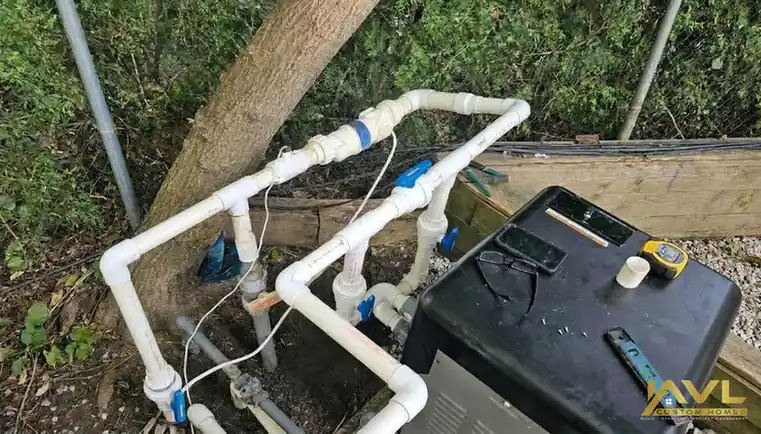
A properly designed bypass helps isolate or manage flow through the heater without forcing every service step through it. It makes winterization and future work easier—but it is not a shield against bad chemistry, wrong flow or skipped drainage.
Sanitizer placement matters too. Hayward installation guidance, for example, requires an automatic chlorinator downstream of the heater and recommends a corrosion-resistant check valve so concentrated sanitizer cannot back-siphon into the heater. If a pad has no sensible isolation path, have the plumbing evaluated rather than improvising every spring and fall.
Can I close my pool myself?
Yes—many homeowners can perform routine parts with the manuals in hand. The hard part is knowing the system. DIY becomes risky when the plumbing layout is unknown, heater drainage is unclear, gas or electrical work is involved, water features exist, or it is the first closing after buying the home. Do not improvise around freeze protection.
| Closing task | Experienced homeowner | Call a qualified specialist |
|---|---|---|
| Water test, cleaning, cover install | Usually appropriate with manuals in hand | If cover hardware is damaged or safety rating is unclear |
| Plumbing blow-out and plugs | Only when the layout and procedure are known | Unknown plumbing, water features, or first winter on a new purchase |
| Pump / filter drainage | Follow the equipment manuals carefully | Cracked housings, seized valves, or missing model documentation |
| Heater drain and isolation | Model-specific drain steps only | Gas, electrical, re-plumb, bypass install, or heater replacement |
| Salt cell / chlorinator winterization | Removal, clean and store per the cell manual | Damaged plates, wiring faults, or automation faults |
8. Salt systems, chlorinators and small parts
If the pool uses a salt chlorine generator, remove, inspect, clean and store the cell exactly as the manufacturer specifies—winter is the right time to catch scale or plate damage before opening. Chlorine feeders and other sanitizer equipment need their own winterization steps; do not leave concentrated sanitizer or other chemicals sitting inside equipment unless the manufacturer specifically calls for that procedure.
Then bag the little parts. Missing plugs, caps and fittings are easy to overlook when spring arrives. Keep removable parts together, label the container, and take pictures.
9. Cover, equipment protection and winter monitoring
The cover is the final layer of protection, not the whole winterization system, so inspect straps, springs, anchors and wind lift before you install it and follow manufacturer tension guidance through winter.
Mesh, solid and automatic covers behave differently—mesh passes water; solid covers collect melt and may need water management; automatics have their own shutdown rules. Not every cover is a safety cover, so do not assume it can support a person. Protect outdoor equipment from weather, but never wrap a gas-fired heater in a way that blocks combustion air, ventilation or service clearances. After major storms or heavy snow, do a quick visual check of cover, water level, pad drainage and exposed equipment.
10. The AVL pool-closing checklist
I built a printable AVL Pool Closing & Winterization Checklist for homeowners who want something beside the equipment pad—not another vague tip sheet—so you can tick water, plumbing, equipment and cover work in order.
- Manuals located: pool, cover, heater, filter, sanitizer / salt cell
- Water tested and corrected to closing chemistry targets
- Pool cleaned; debris removed before the cover goes on
- Water level set to the pool and cover manufacturer instructions
- Plumbing lines winterized; plugs and caps installed as required
- Pump and filter drained, cleaned and double-checked for trapped water
- Heater isolated and drained per the exact model procedure
- Salt cell or chlorinator winterized; small parts bagged and labelled
- Cover inspected, secured and tensioned; drainage around the pad clear
- Valve positions and equipment labels photographed for spring
Print the AVL Pool Closing & Winterization Checklist
Keep the checklist with your pool records and add your heater model, filter type, cover type, valve photos and spring repair notes. Closing is only half the job—making next spring easier is the other half.
Download the Pool Closing ChecklistIf you already use a broader seasonal system for the house, the pool list fits into it. Our Toronto & GTA home maintenance checklist covers the rest of the property through the four seasons.
11. When a qualified pool-heater installer is the right call
Experienced homeowners can handle many closing steps with the manuals in hand—but heater replacement, relocation, gas connection, electrical controls, automation and major re-plumbing belong with a qualified pool-heater installer who understands the whole system, not just the cabinet.
In the GTA, 4Most Energy’s pool-heater services cover gas, propane and electric heat-pump systems and include equipment supply, pool plumbing, gas piping, electrical and automation work. Their current service information also describes winterizing pool heaters across the GTA and Southern Ontario.
That is the specialist relationship I mean: if the job involves heater selection, installation, gas, electrical, plumbing or system integration, use a qualified installer for that scope. A closing guide should not pretend every homeowner should perform gas or electrical work.
Disclosure: AVL Custom Homes may receive a referral fee through certain partner relationships. Recommendations here are intended to match the homeowner’s needs and the technical scope of the work.
12. The whole-home fall maintenance connection
Stop treating the pool as an isolated fall project: the same week you close it, walk roof drainage, downspouts, grading, sump, hose bibs, HVAC filters and obvious window or door seal failures on the rest of the house.
On a high-value home, a missed drainage problem can cost far more than a seasonal review. The pool is simply one more system that has to survive the same Ontario winter. That is why I separate maintenance from a handyman ticket: a maintenance program documents conditions, prioritizes risk and coordinates the right trade. That philosophy sits behind AVL’s maintenance-plan approach and our Annual Home Care program.
If you bought a home with a pool you did not install, start a maintenance record from day one—models, service history, cover type, valve layout and known repairs. You do not need every answer on day one. You need to stop losing information between seasons.
13. Frequently asked questions
When should I close my pool in Toronto or the GTA?
There is no single calendar date. Plan around sustained cooling and the risk of freezing, while allowing enough time to complete the water, plumbing, equipment, and cover work correctly. Closing too early can leave warm water encouraging algae; closing too late can expose water-filled equipment and plumbing to freezing conditions.
What temperature should the pool water be before closing?
There is no single Ontario closing temperature that applies to every pool. Base timing on sustained cooling, algae risk under a cover, freeze risk to water-filled equipment, and the procedure from your pool professional or equipment manuals—not a copied number from another backyard.
How much does pool closing cost in Toronto and the GTA?
Cost varies with pool size, access, pool type, equipment, water features, heater, salt system, cover, plumbing complexity, condition, needed repairs, and whether opening and closing are bundled. A straightforward seasonal closing is very different from winterizing a pool with multiple water features, complex automation, an aging heater, or unknown plumbing.
Can I close my pool myself?
Yes, many homeowners can handle routine parts with the manuals in hand. DIY becomes risky when the plumbing layout is unknown, heater drainage is unclear, gas or electrical work is involved, water features exist, or it is the first closing after buying the home. Do not improvise around freeze protection.
Should I completely drain my pool for winter?
No. Do not treat complete drainage as a universal winterization step. Pool construction, liner type, groundwater conditions and the cover system all matter. Follow the pool manufacturer’s instructions for the correct water level.
How far should I lower the pool water?
The correct level depends on the pool and cover system. Some manufacturer guidance uses a point below the skimmer, but solid and mesh covers and different pool constructions can require different levels. Use your pool and cover manufacturer instructions rather than copying a neighbour’s number.
Why is the bypass around a pool heater important?
A properly designed bypass can help control and isolate water flow through the heater and can make service and winterization easier. It does not replace correct water chemistry, proper plumbing, or the manufacturer’s requirements.
Can bad pool chemistry damage a heater?
Yes. Manufacturer documentation warns that excessive chlorine and low pH can accelerate corrosion and damage heat exchangers. Chemical injection and chlorinator placement also matter because concentrated sanitizer should not be allowed to back-siphon into the heater.
Do I need to drain the pool heater?
Outdoor heaters in freezing climates generally require manufacturer-specific winterization and drainage. The exact drain points and sequence vary by model, so use the heater manual rather than guessing.
What should I do with the salt cell before winter?
If your system uses a salt cell, follow the manufacturer’s procedure for removal, cleaning, inspection and storage. Winterization is also a good time to identify scale, damaged plates, wiring issues or other service needs before spring.
Should I cover the pool equipment outside?
Protect exposed equipment from weather where appropriate, but never wrap or cover a gas-fired heater in a way that blocks required combustion or ventilation air. Follow the equipment manufacturer’s covering requirements.
What is the easiest thing homeowners forget during pool closing?
Small parts and documentation. Plugs, caps, fittings and valve positions are easy to forget by spring. I recommend taking photos before changing anything and keeping removable parts together in a labelled, dry/protected container.
Is pool closing part of whole-home maintenance?
It should be. The pool is one outdoor system. Fall is also the right time to review roof drainage, eavestroughs, downspouts, grading, exterior plumbing, HVAC, sump equipment, windows and other winter-sensitive parts of the home.
I just bought a house with a pool. Where should I start?
Start by documenting what you have before changing anything. Photograph the equipment pad and valve positions, record the heater and filter model numbers, identify the pool and cover type, locate the manuals, and write down the last known service or repair history. If you cannot identify the plumbing layout or winterization method, that is a good reason to have the system reviewed before closing it.
Technical references
- Latham Pool winterization guidance
- Pentair heater guidance on water chemistry
- Hayward heater installation guidance
Need the rest of the house ready for winter?
Pool closing is one seasonal task. For homeowners who want a documented, builder-led approach to the property as a whole, see Annual Home Care or contact AVL about a maintenance review.
Request a maintenance review
Written by Ali Vaez
Founder & Principal Builder, AVL Custom Homes Inc.
Structural engineer with a BSc and MSc in Civil Engineering. Over 20 years of global construction experience, GTA operations since 2014.
Published: 2026-09-14 · 19 min read
